English
 Español
Industry News
Home / News / Industry News / What are the structural requirements for a high-quality empty perfume bottle to ensure leak-proof performance in global shipping?
Jan 27, 2026
Content
In the competitive landscape of the fragrance industry, the integrity of packaging is paramount, particularly when navigating the complexities of global logistics. An Empty Perfume Bottle is not merely a vessel for liquid; it is a sophisticated engineered barrier designed to withstand variations in atmospheric pressure, temperature fluctuations, and physical shocks during transit. For B2B buyers and wholesale distributors, the cost of product leakage extends beyond the loss of liquid—it encompasses reputational damage, environmental hazards, and logistical nightmares. Ensuring that Empty Glass Perfume Bottles Wholesale meet rigorous structural standards is the first line of defense against these risks. By understanding the technical specifications of glass annealing, closure tolerances, and dispensing mechanisms, procurement professionals can ensure supply chain resilience and product safety.
We are a professional manufacturer specializing in the production of perfume bottles, fragrance bottles and bottle caps, with strong development and supporting service capabilities. At present, the daily output of the factory can reach 1.4 million glass bottles and 1 million bottle caps, supporting mold customization, accessory development, and multiple post-processing processes such as spraying, printing, electroplating, hot stamping, etc. We offer a wide range of cover material options, including ABS, PP, Surlyn, K-resin, PCTA, PE, and acrylic, to meet the texture and functional needs of different brands. Over the years, we have earned the trust and praise of numerous customers. We continue to introduce advanced equipment, improve manufacturing accuracy, pay attention to market changes, optimize products and services, and only bring higher standard packaging solutions to customers.
The industry has seen a significant shift towards standardization to mitigate transport risks. According to the 2024-2025 Special Provisions for Transporting Articles of the International Air Transport Association (IATA) Dangerous Goods Regulations (DGR), the standards for packaging Class 3 flammable liquids, including perfumes and alcohols, have tightened to emphasize the use of inner receptacles combined with leak-proof outer packaging. The regulations specifically call for rigorous drop and vibration testing protocols to simulate real-world transit conditions, ensuring that closures do not fail under pressure differentials experienced during air freight.
Source: IATA Dangerous Goods Regulations
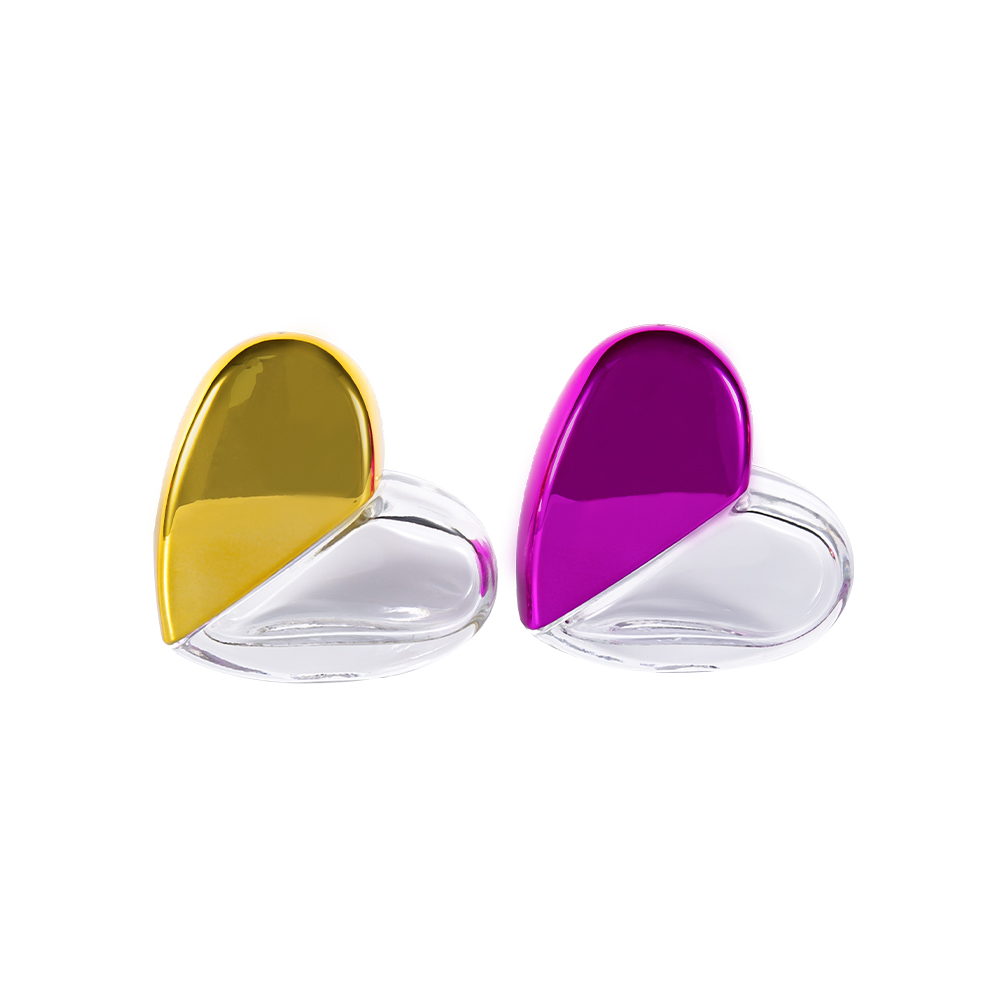
The foundation of a leak-proof bottle lies in the structural integrity of the glass itself. While a thick bottle might seem robust, without proper thermal treatment, internal stresses can lead to microscopic fractures or catastrophic failure during shipping. The annealing process involves heating the glass to a specific temperature and then cooling it slowly to relieve internal stresses. For Empty Glass Perfume Bottles Wholesale, ensuring the annealing point is uniform across the batch is critical to prevent "spontaneous breakage" caused by thermal shock. Furthermore, the distribution of glass thickness must be even; uneven walls create weak points where pressure differentials can compromise the bottle, leading to cracks that compromise the hermetic seal.
Selecting the right glass composition is essential for Empty Glass Perfume Bottles Wholesale to ensure they survive the rigors of global shipping. High-quality soda-lime glass is often used for its balance of chemical resistance and workability, though lead crystal may be chosen for Luxury Empty Perfume Bottles For Sale due to its clarity and weight. However, the chemical compatibility of the glass with the essential oils and high alcohol content (often 70-90% ABV) is non-negotiable. A poor chemical match can result in micro-leaching or glass corrosion over time, which weakens the bottle structure.
| Material Property | Standard Soda-Lime Glass | Lead Crystal Glass |
| Durability | High impact resistance; less prone to chipping. | Softer; more susceptible to scratching and chipping. |
| Chemical Resistance | Excellent resistance to high alcohol concentrations. | Good, but may react with very high pH or acidic formulas over long periods. |
| Weight & Feel | Lighter; cost-effective for shipping. | Heavier; conveys a premium, substantial feel. |
| Thermal Expansion | Lower expansion rate; better thermal shock resistance. | Higher expansion rate; requires careful annealing. |
The annealing process is a critical heat treatment that removes internal stresses created during the forming process. Glass cools unevenly from the outside in; if cooled too quickly, the outer surface solidifies while the inside is still contracting, creating immense tension. In shipping, when an Empty Perfume Bottle encounters varying temperatures, these internal stresses can cause cracks to propagate from the inside out. Proper annealing ensures the glass is isotropic, meaning it has uniform physical properties in all directions, which is essential for preventing spontaneous breakage.
The interface between the bottle and the closure is the most common point of failure in liquid packaging. Precision in the neck finish—the threaded portion of the bottle that accepts the cap or pump—is vital for achieving a hermetic seal. Specifications such as TPI (threads per inch), finish diameter, and neck height must adhere to strict tolerances. Even a deviation of a fraction of a millimeter can prevent the cap from threading correctly, leading to cross-threading or insufficient compression of the gasket. For Refillable Perfume Atomizer Bottle designs, which undergo repeated opening and closing, the durability of the thread profile is especially important to ensure the seal holds after multiple consumer uses.
The Refillable Perfume Atomizer Bottle presents unique challenges because the refill mechanism often involves removing the spray pump and exposing the threading to air and liquid. The structural design must account for the wear and tear of repeated cycles. The neck must be reinforced to withstand the torque applied by users tightening the pump. Furthermore, the bead or lip of the neck must be flawless to ensure the pump's housing clip snaps into place securely, preventing the pump from being ejected due to internal pressure buildup during shipping.
td>Designed for single installation; minimal wear.td>Often crimped or glued permanently.td>High, as it is a closed system. td>Variable; relies on user re-assembly precision.
| Feature | Standard Spray Pump | Refillable Atomizer System |
| Thread Durability | Engineered for high friction and repeated assembly cycles. | |
| Locking Mechanism | Uses a snap-fit or screw-fit that allows removal. | |
| Seal Integrity |
Adhering to established neck finish standards (such as the Global Standard for Glass Packaging) ensures compatibility across global supply chains. The "T" dimension (vertical dimension of the neck) and the "E" dimension (outside diameter of the neck) must be controlled within tight tolerances, often +/- 0.1mm. This precision ensures that pumps and caps sourced from different suppliers fit the Empty Perfume Bottle correctly, which is crucial for B2B buyers assembling components from various vendors.
The pump assembly is the active component in leak prevention. It consists of the housing, the dip tube, the actuator, and the spring mechanism, but the critical sealing element is the gasket or liner. This gasket sits between the pump housing and the glass lip. The compression force exerted by the pump onto the gasket must be sufficient to overcome the internal pressure of the liquid. For Luxury Empty Perfume Bottles For Sale, the pumps are often larger and heavier, requiring a robust neck support to prevent stress concentration that could crack the glass.
When dealing with Luxury Empty Perfume Bottles For Sale, the seal is not just functional but also aesthetic. The pump often serves as a visual statement, adding weight and height. However, this added mass increases the leverage on the bottle neck. Therefore, the structural design must include a reinforced collar or bead on the glass. Additionally, the gasket liner in luxury pumps is often made of advanced materials like PTFE (Teflon) to ensure a smooth, long-lasting seal that doesn't degrade when exposed to complex fragrance oils containing citrus or terpenes.
td>Good for alcohol; may degrade with essential oils.td>Standard lifespan; may dry out over years.td>Low friction; allows for smooth pump engagement.
| Gasket Material | Standard Rubber/PE | PTFE (Teflon) |
| Chemical Resistance | Excellent; inert to almost all solvents and oils. | |
| Lifespan | Extended lifespan; maintains elasticity longer. | |
| Friction | Higher friction; requires more torque to tighten. |
The liner is the final barrier against leakage. In a standard cap closure, an induction seal liner is often used, which bonds to the rim of the bottle when heated. In pump systems, the gasket is integrated into the pump housing. The structural requirement here is "compression set resistance"—the ability of the gasket to rebound and maintain pressure after being compressed for long periods. If the gasket takes a "compression set," it loses its sealing ability during transit, leading to leaks.
Small format bottles, such as the 5ml Empty Perfume Bottle With Cap, present a unique set of physical challenges due to their size. The surface area-to-volume ratio is much higher, meaning evaporation and pressure changes have a more pronounced effect. Furthermore, the tolerances are physically smaller, making manufacturing precision even more critical. A microscopic defect on the thread of a 5ml Empty Perfume Bottle With Cap represents a larger percentage of the total sealing surface compared to a 100ml bottle.
Manufacturing a 5ml Empty Perfume Bottle With Cap requires specialized molding equipment to ensure the neck finish is flawless. Any deviation in the neck "T" dimension can cause the cap to sit askew, breaking the seal. The caps for these small bottles often feature specific liners designed to prevent leakage through "micro-leakage" paths. The structural design often includes a "ribbed" or "knurled" cap surface to ensure that the user can apply sufficient torque to secure the cap without crushing the small glass body.
td>More forgiving of minor imperfections.td>Automated torquing is standard. td>Often hand-packed; requires consistent manual torque.td>Larger volume acts as a buffer against pressure changes. td>Small volume reacts rapidly to altitude/temperature changes.
| Design Aspect | Large Format Bottles | Small Format (e.g., 5ml) Bottles |
| Tolerance Sensitivity | Extremely sensitive; minor defects cause leaks. | |
| Cap Application | ||
| Pressure Differential |
In small volumes, the surface tension forces are significant. If the cap seal is not perfect, alcohol can creep between the glass and the liner via capillary action. Structural features such as a "lagged" thread or a specific bead profile are incorporated into the Empty Perfume Bottle design to interrupt this path and force the liquid to form a droplet, effectively sealing the gap.
Ensuring leak-proof performance in global shipping is a multifaceted engineering challenge that requires attention to detail at every stage of production. From the initial annealing of the Empty Perfume Bottle to the precision machining of the neck finish and the selection of advanced gasket materials for Refillable Perfume Atomizer Bottle systems, every element plays a role. For B2B buyers, partnering with manufacturers who maintain strict quality control over these structural parameters is essential. By prioritizing Luxury Empty Perfume Bottles For Sale that meet rigorous technical standards, and by understanding the specific needs of items like the 5ml Empty Perfume Bottle With Cap, businesses can significantly reduce the risk of in-transit damage and ensure product integrity.
Leakage during air travel is primarily caused by cabin pressure changes. The cabin pressure at cruising altitude is lower than ground pressure, causing the air inside the Empty Perfume Bottle (or filled bottle) to expand. If the closure system does not have a robust valve or sufficient gasket compression, the expanding air forces liquid past the seal. High-quality Empty Glass Perfume Bottles Wholesale are tested to withstand these pressure differentials without failure.
The best material for gaskets is PTFE (Teflon) or a high-grade nitrile rubber. PTFE is preferred for Luxury Empty Perfume Bottles For Sale because it is chemically inert, meaning it won't react with alcohol or essential oils, and it maintains its elasticity over a wide temperature range, ensuring a long-lasting seal.
They can be more prone to leaking if the user does not reassemble the components correctly. A Refillable Perfume Atomizer Bottle relies on the user correctly aligning and tightening the pump. To mitigate this, manufacturers design the threads with higher tolerances and often include a secondary locking mechanism to ensure the seal is secure even if the tightening torque is slightly low.
Proper annealing can be verified using polarized light filters, which reveal internal stress patterns in the glass. For B2B buyers, it is essential to request quality control certificates from Empty Glass Perfume Bottles Wholesale suppliers that confirm annealing lehr temperatures and duration. Bottles that are not properly annealed are more likely to crack during the temperature fluctuations of global shipping.
Even a small 5ml Empty Perfume Bottle With Cap should adhere to industry standard finishes like the 13/415 or 15/415 profiles. This ensures compatibility with standard pumps and caps. The tolerance on the "T" dimension (height) is particularly critical in small formats; a deviation of just 0.2mm can prevent the cap from tightening enough to seal.


+86 151 9036 6355
+86 510 8627 8328

hjglassfactory@vip.163.com

Room 1304, Jiufang Plaza, No. 286, Hongqiao South Road, Jiangyin City, Jiangsu Province, China
Copyright © 2025 HJ Glass Factory
All Rights Reserved.
Wholesale Empty Perfume Bottles, Empty Aromatherapy Bottles