

 English
 Español
Industry News
How Is a Premium Glass Perfume Bottle Manufactured?
Apr 09, 2026
Content
The glass perfume bottle represents more than mere packaging. It serves as the first physical touchpoint between a fragrance brand and its consumer. For procurement managers and wholesale buyers, understanding the technical intricacies of the glass perfume bottle manufacturing process ensures informed sourcing decisions that balance cost, quality, and brand positioning.
Understanding Glass Types for Perfume Packaging
Material selection fundamentally determines the performance, aesthetics, and cost structure of perfume packaging. Three primary glass types dominate the industry, each offering distinct advantages for different market segments.
Soda-Lime Glass: The Industry Standard
Soda-lime glass constitutes approximately 90% of global glass production. This material combines silica sand (70%), soda ash, and limestone. Manufacturers favor soda-lime glass for custom glass perfume bottle wholesale orders because it offers excellent moldability and cost efficiency. The material provides adequate chemical resistance for standard alcohol-based fragrances and accepts decoration processes readily.
Borosilicate Glass: Chemical Stability Champion
Borosilicate glass incorporates boron trioxide into the silica matrix. This composition delivers superior thermal shock resistance and chemical inertness. Niche fragrance brands prefer borosilicate when packaging natural perfumes containing high concentrations of essential oils. The material prevents chemical interaction between container and contents, preserving fragrance integrity over extended storage periods.
High Flint Glass: Luxury Clarity
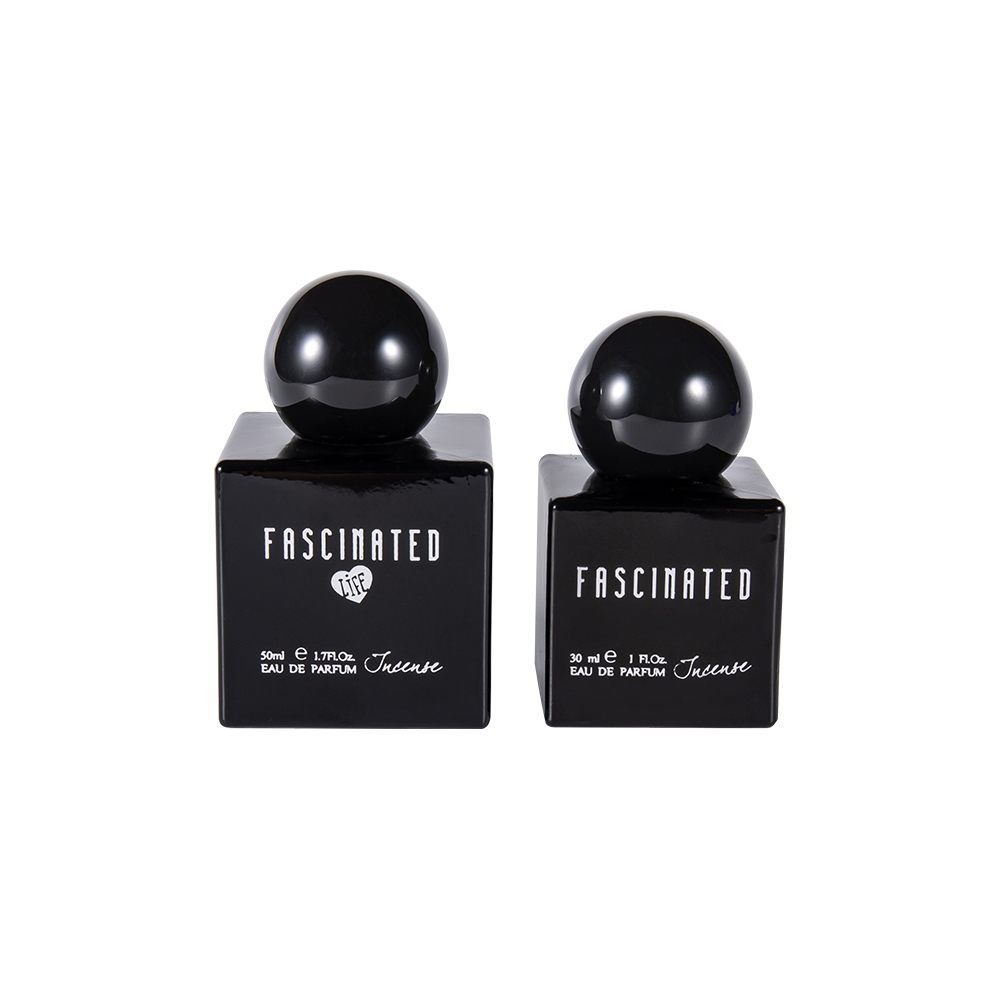
High flint glass contains elevated levels of lead oxide or modern substitutes like barium and zinc oxides. These additives increase the refractive index, producing exceptional brilliance and clarity. Luxury houses utilize this material for flagship products where visual impact justifies higher unit costs. The substantial weight of high flint glass creates tactile impressions of quality and permanence.
The following table compares key technical parameters across these glass types:
| Parameter | Soda-Lime Glass | Borosilicate Glass | High Flint Glass |
| Iron Content | <0.03% | <0.01% | <0.005% |
| Thermal Resistance | Moderate (up to 150°C) | High (up to 230°C) | Low (up to 120°C) |
| Chemical Reactivity | Low | Negligible | Very Low |
| Refractive Index | 1.52 | 1.47 | 1.54-1.56 |
| Relative Cost | 1.0 (baseline) | 1.5-2.0x | 3.0-5.0x |
| Primary Application | Mass market perfumes | Natural/organic fragrances | Luxury/prestige lines |
The Complete Manufacturing Process
Industrial production of glass perfume bottle containers follows a systematic workflow requiring precise temperature control and dimensional accuracy.
Raw Material Preparation and Formula Control
Manufacturers begin by crushing and grinding quartz sand into fine powder. Magnetic separation removes iron impurities that would cause discoloration. The batch mixture requires exact proportions: approximately 70% silica dioxide, 15% soda ash, 10% limestone, and 5% feldspar. Quality control laboratories analyze raw material purity before furnace feeding.
Glass Melting at High Temperature
The batch mixture enters tank furnaces operating at 1500-1600°C. This melting phase lasts 4-6 hours. Compressed air stirring removes bubbles from the molten glass, preventing pinholes in finished bottles. The glass liquid then cools to 1100-1200°C before transferring to molding stations.
Precision Molding Techniques
Two primary methods dominate glass perfume bottle production techniques: press-blow molding and blow-blow molding.
Press-Blow Molding
This technique suits short, thick-walled bottles. The process sequence involves:
- Feeding: A measured glass drop enters the female mold
- Pressing: A metal punch forms the preform shape, including the bottle mouth and shoulder
- Blowing: Compressed air expands the preform against the mold walls
- Demolding: The bottle releases after reaching structural rigidity
Blow-Blow Molding
This method produces slender, thin-walled bottles with delicate necks. Initial blowing creates a hollow preform with a small opening. Secondary blowing expands the preform to final dimensions within the finishing mold.
The comparison below illustrates the technical distinctions between these molding approaches:
| Characteristic | Press-Blow Molding | Blow-Blow Molding |
| Wall Thickness | Thicker (2-4mm) | Thinner (1-2mm) |
| Bottle Geometry | Compact, stable bases | Elongated, elegant necks |
| Production Speed | 80-120 bottles/minute | 60-90 bottles/minute |
| Mold Precision | ±0.1mm tolerance | ±0.15mm tolerance |
| Typical Capacity Range | 30ml-100ml | 8ml-50ml |
| Cost Efficiency | Higher for standard shapes | Moderate for complex designs |
Annealing Treatment for Stress Relief
Freshly molded bottles contain internal thermal stresses from differential cooling rates between surfaces and interiors. Annealing ovens raise the bottle temperature to 500-600°C, maintaining this level for 1-2 hours. Controlled cooling proceeds at 1-2°C per minute until reaching ambient temperature. This process increases bottle strength by over 30% and enhances resistance to thermal shock.
Post-Processing and Surface Finishing
After annealing, bottles undergo multiple finishing stages to achieve commercial standards.
Cold Working and Polishing
Diamond grinding wheels cut bottle mouths to precise heights. Edge polishing removes burrs, ensuring proper fit with pump heads and caps. Surface polishing eliminates mold marks and improves transparency. Some manufacturers apply frosting through sandblasting or hydrofluoric acid etching to create matte textures.
Decoration Techniques
Screen Printing and Hot Stamping
Screen printing applies brand logos and product information using UV-cured inks. Hot stamping transfers metallic foils onto bottle surfaces through heat and pressure. These methods achieve decoration precision of ±0.2mm.
Frosting and Etching
Chemical etching creates permanent matte finishes resistant to handling wear. Laser engraving produces intricate relief patterns suitable for limited editions.
UV Coating and Color Spraying
Surface spraying applies colored lacquers or pearlescent coatings. High-temperature baking (150-180°C) cures these layers,s ensuring adhesion durability.
Quality Control Standards for B2B Procurement
Professional buyers should verify supplier compliance with specific quality metrics.
Dimensional Accuracy Requirements
Neck inner diameter must maintain ±0.1mm tolerance to ensure pump head compatibility. Bottle height variation should not exceed ±0.5mm across production batches.
Chemical Compatibility Testing
Suppliers must demonstrate that soda lime glass perfume bottle vs crystal alternatives resist alcohol-based fragrance formulations without chemical interaction. Standard testing involves 30-day immersion trials, LS monitoring pH stability, and extractable substances.
Seal Integrity Verification
Leak testing subjects sealed bottles to pressure differentials and inverted storage. Acceptable standards specify zero leakage after 72 hours at 45°C.
Sustainable Trends in Glass Perfume Bottle Production
Environmental considerations increasingly influence manufacturing practices.
Recycled Glass Integration
Leading manufacturers now incorporate 30-70% post-consumer cullet into new batches. This practice reduces energy consumption by approximately 25% compared to virgin material processinEco-friendlydly glass perfume bottle suppliers emphasize closed-loop systems where returned bottles undergo sanitization, crushing, and remelting.
Energy-Efficient Manufacturing
Modern furnaces utilize regenerative heating systems, recovering waste heat from exhaust gases. Electric boosting technologies supplement fossil fuel combustion, reducing carbon emissions per ton of glass produced.
FAQ
What is the typical lead time for custom glass perfume bottle orders?
New mold development requires 20-25 days,s including design confirmation and CNC machining. Initial sample production follows within 7 days of mold completion. Bulk production schedules depend on order volume, with standard capacities ranging from 50,000 to 100,000 bottles per day per production line.
How do I choose between soda-lime and borosilicate glass for my fragrance line?
Select soda-lime glass for standard alcohol-based perfumes where cost efficiency and decoration versatility matter. Choose borosilicate when packaging natural formulations with high essential oil content or when targeting markets emphasizing chemical purity and thermal stability.
What quality certifications should I request from glass perfume bottle manufacturers?
Essential certifications include ISO 9001 for quality management systems, ISO 14001 for environmental management, and REACH compliance for chemical safety. Additional testing reports should cover heavy metal content, migration testing, and dimensional calibration certificates.
References
- Alever World. (2025). The Manufacturing Process of Perfume Glass Bottles. Alever Packaging Technical Documentation.
- Lisson Packaging. (2026). Glass Perfume Bottle Manufacturing Guide: From Raw Materials to Finished Product. Lisson Technical Resources.
- Lisson Packaging. (2026). Different Types of Glass Used in Perfume Bottles: Soda-Lime vs. Crystal. Glass Packaging Research Division.
- Olila Package. (2025). 5 Best Types of Glass for Perfume Bottles You Must Know. Packaging Industry Review.
- Jarsking Global. (2025). Why Glass Type Matters in Perfume Packaging. Fragrance Packaging Science Quarterly.
- Jasmine Perfumes. (2025). Perfume Bottle Manufacturing: From Design to Production. Turkish Glass Manufacturing Association.
NEW PRODUCTS
Let's Discuss Your Specific Packaging Needs And Explore The
Possibilities
further

Contact us
-

+86 151 9036 6355
+86 510 8627 8328
-

hjglassfactory@vip.163.com
-

Room 1304, Jiufang Plaza, No. 286, Hongqiao South Road, Jiangyin City, Jiangsu Province, China
Copyright © 2025 HJ Glass Factory
All Rights Reserved.
Wholesale Empty Perfume Bottles, Empty Aromatherapy Bottles

