

 English
 Español
Industry News
How to Specify Empty Perfume Bottles for Professional Sourcing?
Apr 02, 2026
Content
- 1 Five High-Search-Volume Long-Tail Keywords for Industry Professionals
- 2 The Engineering of Fragrance Packaging
- 3 Manufacturing Processes and Quality Parameters
- 4 Closure Systems and Dispensing Mechanisms
- 5 Quality Assurance and Testing Protocols
- 6 Comparative Analysis: Standard vs. Premium Bottle Specifications
- 7 Sustainability Considerations and Refillable Systems
- 8 Frequently Asked Questions (FAQ)
- 9 References and Further Reading
For product developers, brand owners, and procurement specialists, selecting the right primary packaging is a decision that impacts product stability, brand perception, and manufacturing efficiency. Empty perfume bottle specifications extend far beyond aesthetic appeal—they involve material science, closure integrity, and compatibility with complex fragrance formulations. This technical guide provides engineering-level insights into the selection, testing, and quality assurance of perfume bottles for B2B buyers and volume purchasers.
Five High-Search-Volume Long-Tail Keywords for Industry Professionals
Understanding the specific terminology used by procurement teams and packaging engineers helps align product specifications with market requirements. The following long-tail keywords represent frequent B2B search queries.
- Wholesale empty perfume bottles: This commercial term indicates volume purchasing intent, requiring supplier capability for bulk packaging, palletized shipping, and consistent quality across large batches.
- luxury empty perfume bottles: A specification-focused query targeting premium aesthetics, heavy glass construction, and decorative finishing techniques such as metallization or ceramic coating.
- empty perfume bottles with crimp sprayers: A technical specification combining the primary container with a specific closure type—crimp pumps—commonly used in traditional fine fragrance assembly.
- refillable empty perfume bottles: Reflects growing sustainability demands and consumer preference for reusable packaging, requiring durable construction and reliable closure mechanisms.
- mini empty perfume bottles for travel: An application-specific keyword for small-format packaging (typically 3ml to 15ml) requiring precise dimensional tolerances for leak-free portability.
The Engineering of Fragrance Packaging
Empty perfume bottle manufacturing involves multiple engineering disciplines, from glass chemistry to precision plastic injection molding. The primary function extends beyond containment to include preservation of volatile fragrance compounds, controlled dispensing, and user experience optimization.
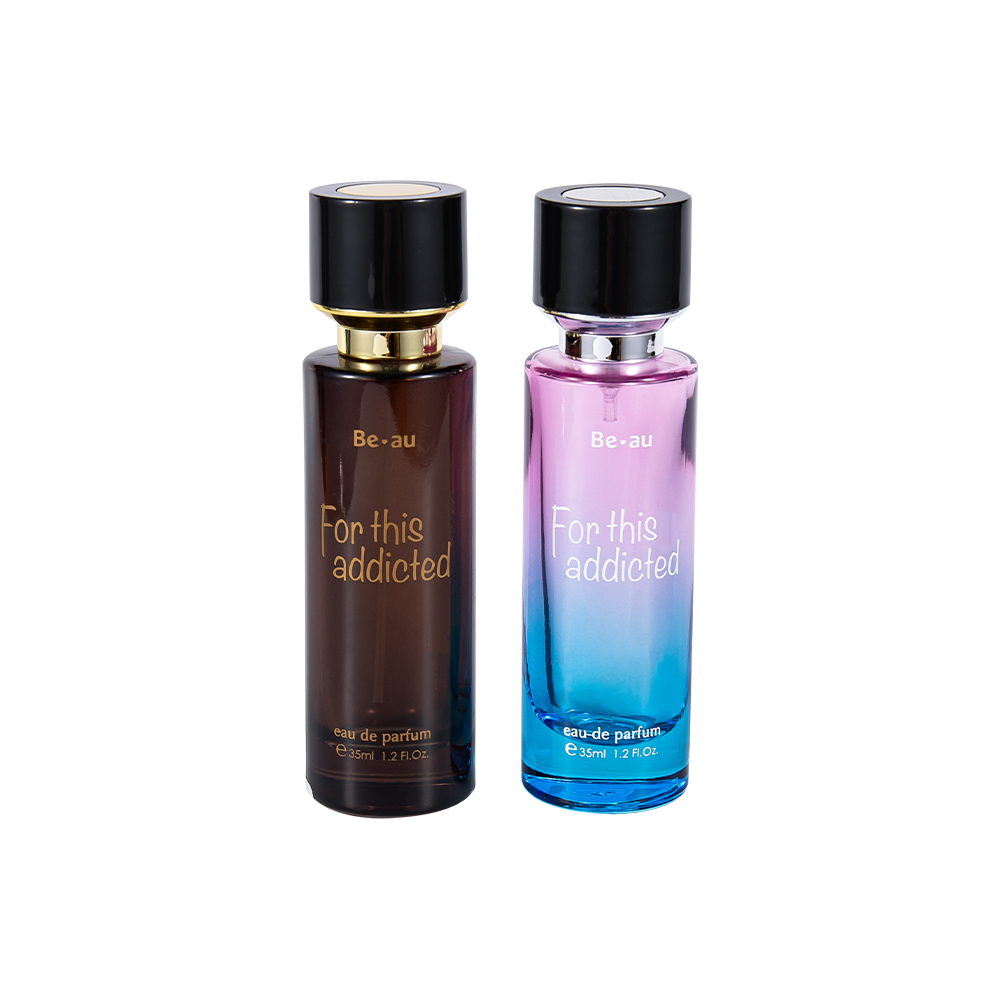
Material Selection and Performance Characteristics
The choice of material fundamentally determines the bottle's chemical resistance, weight, optical clarity, and cost structure. Glass dominates the premium fragrance sector due to its inertness and aesthetic qualities, while specialized plastics serve specific applications.
Glass Composition and Types
- Type III soda-lime glass: The most common material for mass-market fragrance bottles. It offers good workability for automatic forming, acceptable chemical resistance, and economic production costs. Typical composition includes 70-75% SiO₂, 12-18% Na₂O, and 5-12% CaO.
- Type II treated soda-lime glass: Undergoes surface treatment to improve chemical resistance. Used for more sensitive formulations where slight alkalinity from untreated glass could affect fragrance stability.
- Type I borosilicate glass: Premium material with high thermal shock resistance and superior chemical inertness. Contains significant boron trioxide (5-13%), which reduces thermal expansion. Specified for luxury lines or formulations requiring maximum stability.
- Crystal glass: Contains lead oxide (typically 24% or more) or barium, zinc, or potassium oxides. Provides exceptional refractive index for brilliance and sparkle. Used exclusively for high-end luxury empty perfume bottles.
Plastic Alternatives
For travel sizes, samplers, or mass-market lines, engineered polymers offer weight reduction and breakage resistance. PETG (glycol-modified polyethylene terephthalate) provides glass-like clarity with excellent impact resistance. PCTA (acid-modified polyester) offers superior chemical resistance and clarity. Polypropylene is specified for cost-sensitive applications but provides lower clarity.
Manufacturing Processes and Quality Parameters
Understanding production methods enables buyers to evaluate supplier capabilities and set realistic quality expectations for wholesale empty perfume bottles.
Glass Bottle Forming
The majority of perfume bottles are produced using the press-and-blow process. A gob of molten glass is pressed into a parison (preform) shape, then transferred to a final blow mold where air expands it against the mold cavity. This two-step process enables complex shapes with precise neck finishes. For extremely intricate designs, hand-blown and hand-finished techniques are employed, though at significantly higher cost and lower volume consistency.
Critical Dimensional Specifications
When specifying empty perfume bottles with crimp sprayers, the neck finish dimensions are the most critical quality parameter. The finish must conform to industry standards (typically GCMI or SPI specifications) to ensure proper fitment of pumps and caps.
| Parameter | Specification Range | Measurement Method | Impact on Performance |
|---|---|---|---|
| Neck finish diameter | Typically 13mm, 15mm, 18mm, 20mm (±0.2mm) | Go/no-go gauges or optical comparators | Determines pump/cap fit; excessive variation causes leakage or assembly failure. |
| Total height | Varies by design (±0.5mm typical) | Height gauge or automated vision system | Affects carton fit and automated filling line handling |
| Wall thickness distribution | Minimum 1.2mm, variation <30% around circumference | Ultrasonic thickness gauge or sectioning | Thin spots cause breakage risk; thick areas add weight and cost |
| Fill point volume | Nominal capacity +10% overflow capacity | Volumetric measurement to the specified fill height | Ensures consistent liquid level for aesthetics and filling accuracy |
| Sealing surface flatness | 0.1mm maximum deviation | Optical profilometry or feeler gauges | Critical for a leak-proof seal with a gasket or liner |
Closure Systems and Dispensing Mechanisms
The interaction between bottle and closure defines the user experience and product integrity. Empty perfume bottles with crimp sprayers represent the traditional fine fragrance standard, while other configurations serve specific market segments.
Spray Pump Types
- Crimp pumps: The industry standard for fine fragrance. The pump is mechanically crimped onto the glass finish using a ferrule (typically aluminum). This creates a permanent, tamper-evident seal requiring specialized assembly equipment.
- Screw pumps: Threaded onto the bottle finish, enabling removal and replacement. Common for refillable empty perfume bottles and mass-market applications where consumer refillability is desired.
- Continuous spray (non-aerosol) pumps: Mechanical pumps that deliver fine mist without propellants. Used for both fine fragrance and personal care applications.
- Lottery pumps: Higher-viscosity dispensers for splash-on applications or thicker formulations.
Decorative Finishing Techniques
For luxury empty perfume bottles, surface finishing transforms standard containers into brand statements.
- Spray painting: Application of colored lacquers, often with UV-cured topcoats for durability. Opacity and color matching to Pantone standards are critical quality parameters.
- Metallization: Vacuum deposition of aluminum or other metals creates mirror-like finishes. Adhesion testing and humidity resistance are essential verification steps.
- Ceramic decals and direct printing: Permanent decoration fired onto glass. Must withstand handling, filling, and secondary packaging operations without wear.
- Acid etching and sandblasting: Creates frosted or textured surfaces by physically or chemically abrading the glass.
Quality Assurance and Testing Protocols
Bulk procurement of wholesale empty perfume bottles requires systematic quality verification to ensure batch-to-batch consistency and packaging line performance.
Incoming Inspection Parameters
- Visual inspection: Stones, bubbles, seeds (tiny bubbles), and surface defects are evaluated against ASTM or internal standards. Acceptance quality limits (AQL) are established based on defect criticality.
- Dimensional verification: Sample bottles are measured for critical dimensions using calibrated tools or automated vision systems. Statistical process control charts track variation over time.
- Thermal shock resistance: Bottles are subjected to rapid temperature changes (typically 35°C to 80°C differential) to assess resistance to thermal stress.
- Chemical resistance: Glass types are verified through hydrolytic resistance testing per USP <660> or EP 3.2.1 standards.
Closure Performance Testing
For empty perfume bottles with crimp sprayers, assembled units undergo rigorous testing:
- Leak testing: Vacuum decay or pressure decay methods detect microscopic leaks that could cause fragrance loss.
- Torque testing: For screw closures, application and removal torque are measured to ensure consumer usability and seal integrity.
- Spray performance: Actuation force, spray pattern, and dose weight are quantified using automated test stands.
- Transport simulation: Vibration and drop testing assess package integrity through distribution channels.
Comparative Analysis: Standard vs. Premium Bottle Specifications
Understanding the technical distinctions between commercial grades enables informed sourcing decisions aligned with brand positioning and budget constraints.
| Parameter | Standard Commercial Grade | Premium/Luxury Grade |
|---|---|---|
| Glass type | Type III soda-lime | Type I borosilicate or crystal |
| Wall thickness tolerance | ±0.3mm | ±0.15mm |
| Surface defects | AQL 1.0 for major defects | AQL 0.25 or zero-defect sampling |
| Decorative finishes | Single-color spray or basic pad printing | Multi-layer metallization, ceramic decals, hand-applied accents |
| Quality documentation | Certificate of analysis with basic parameters | Full-dimensional reports, material certifications, stability data |
| Minimum order quantity | Typically 10,000-50,000 units | 5,000-20,000 units with higher setup costs |
Sustainability Considerations and Refillable Systems
The demand for refillable empty perfume bottles continues to grow as brands commit to circular economy principles. Refillable systems require robust construction to withstand repeated use, typically with heavier wall thickness (2.0mm minimum) and durable finishes resistant to abrasion from handling.
Material innovations include post-consumer recycled (PCR) glass, though technical limitations exist—PCR glass may contain contaminants or inconsistent color. Current technology allows up to 30% PCR content while maintaining optical quality suitable for premium packaging. Recyclable mono-material constructions, where pumps are designed for easy disassembly and material separation, represent the next frontier in sustainable fragrance packaging.
Frequently Asked Questions (FAQ)
What are the standard neck finishes for perfume bottles?
Most fine fragrance bottles utilize 13mm, 15mm, or 18mm crimp finishes conforming to GCMI (Glass Container Manufacturers Institute) specifications. The finish includes precise dimensions for the crimp ring diameter (typically 13.0mm or 15.0mm), sealing surface diameter, and overall height. For screw closures, GPI (Glass Packaging Institute) thread finishes are common, with sizes ranging from 13-415 to 20-410. Always specify the required finish when sourcing empty perfume bottles with crimp sprayers to ensure compatibility with your chosen pump supplier.
How do I specify color matching for decorative bottles?
Color specification should reference Pantone Matching System (PMS) numbers for solid colors, or RAL codes for industrial applications. For glass color (versus applied coating), glass color standards are available from glass manufacturers. When specifying spray painting or ceramic decoration, request that the supplier provide color chips or sample bottles under standard D65 illumination. Include color tolerance parameters (typically ΔE < 2.0 using CIELAB measurements) and verify adhesion through cross-hatch tape testing per ASTM D3359.
What is the typical lead time for custom wholesale empty perfume bottles?
Lead times vary significantly based on complexity and order quantity. Standard stock bottles from existing molds typically ship within 2-4 weeks for wholesale empty perfume bottles. Custom bottles requiring new tooling generally require 12-20 weeks for mold fabrication, sampling, and production. Additional time (2-4 weeks) should be allocated for decorative finishing operations. Buyers should factor in 4-6 weeks for ocean shipping if sourcing internationally, plus potential customs clearance time.
References and Further Reading
- ASTM International. (2023). ASTM C148-17 Standard Test Methods for Polariscopic Examination of Glass Containers.
- Glass Packaging Institute. (2022). Glass Packaging Design Guide and Specifications.
- International Organization for Standardization. (2018). ISO 9058:2008 Glass containers — Standard tolerances for bottles.
- United States Pharmacopeia. (2024). USP <660> Containers — Glass.
- Society of Glass Technology. (2021). "Chemical Durability of Pharmaceutical Glass," SGT Technical Monograph.
- European Pharmacopoeia. (2023). EP 3.2.1 Glass containers for pharmaceutical use.
- Packaging World Magazine. (2024). "Sustainability in Fragrance: Refillable Systems and PCR Materials."
NEW PRODUCTS
Let's Discuss Your Specific Packaging Needs And Explore The
Possibilities
further

Contact us
-

+86 151 9036 6355
+86 510 8627 8328
-

hjglassfactory@vip.163.com
-

Room 1304, Jiufang Plaza, No. 286, Hongqiao South Road, Jiangyin City, Jiangsu Province, China
Copyright © 2025 HJ Glass Factory
All Rights Reserved.
Wholesale Empty Perfume Bottles, Empty Aromatherapy Bottles

