

 English
 Español
Industry News
Why Choose High-Quality Empty Glass Diffuser Bottles?
Apr 09, 2026
Content
- 1 Introduction to Diffuser Container Engineering
- 2 Material Science and Glass Composition
- 3 Structural Design and Functional Components
- 4 Comparative Analysis of Bottle Specifications
- 5 Procurement and Supply Chain Management
- 6 Versatility in Essential Oil Applications
- 7 Conclusion
- 8 Frequently Asked Questions
- 9 References
Introduction to Diffuser Container Engineering
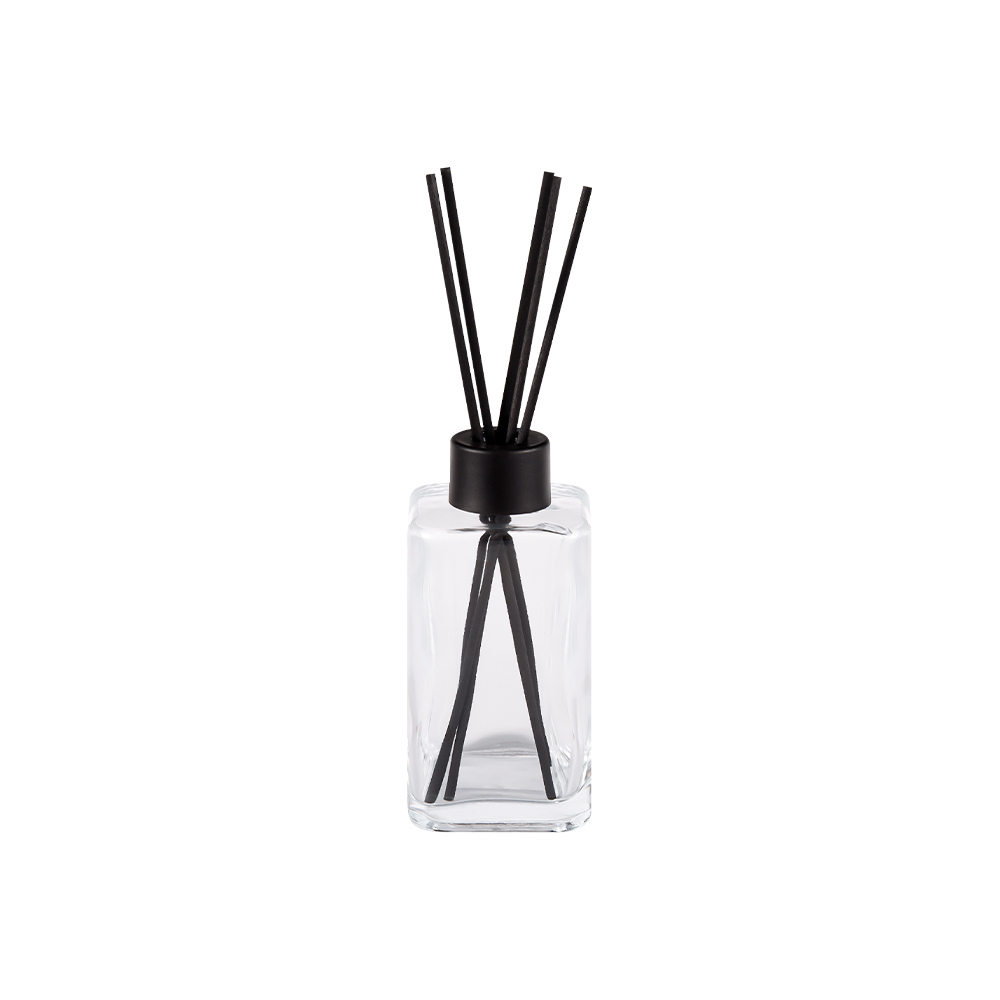
The home fragrance industry relies heavily on the quality of its packaging components. Manufacturers and brands understand that the container is as important as the fragrance oil itself. Empty Glass Diffuser Bottles serve as the primary vessel for reed diffusers, protecting the volatile compounds inside while providing an aesthetic appeal. For B2B buyers, selecting the right glass container involves analyzing technical specifications, material composition, and supply chain reliability. A high-quality bottle ensures user safety and maintains product integrity over several months of use.
Material Science and Glass Composition
The physical properties of the glass determine the bottle's durability and compatibility with essential oils. Engineers must consider the coefficient of thermal expansion and chemical resistance when selecting materials.
Soda-Lime vs. Borosilicate Glass Properties
Most standard diffuser bottles utilize soda-lime glass. This material is economical and sufficient for holding oils at room temperature. However, soda-lime glass can be susceptible to thermal shock if the process involves hot filling. Borosilicate glass offers superior thermal resistance and a lower coefficient of thermal expansion. This makes it suitable for high-temperature processing, though it comes at a higher cost. Both materials provide excellent barrier properties against oxygen and moisture, which preserves the fragrance quality.
Clarity and Color Options
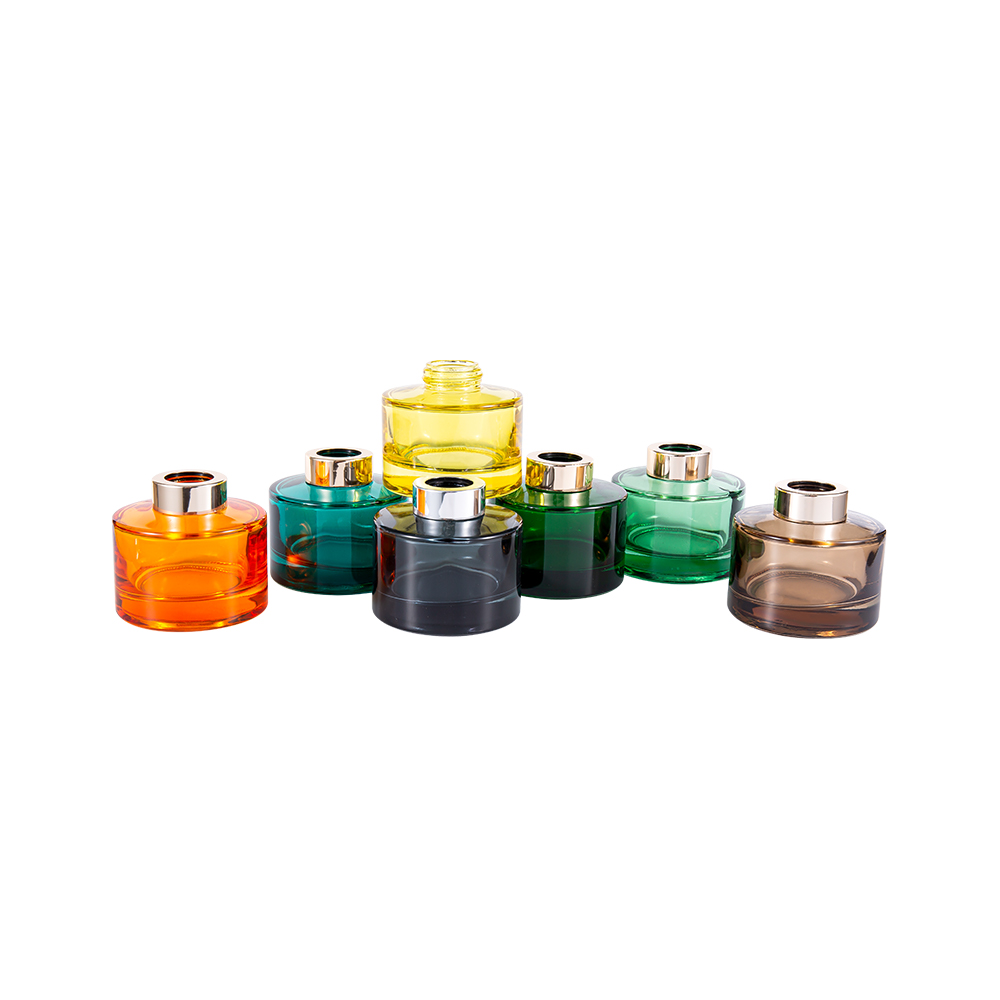
Visual presentation is a critical selling point for home fragrance products. Clear glass diffuser bottles are highly popular because they allow consumers to see the liquid level and the color of the oil. This transparency requires high-quality raw materials to avoid bubbles or streaks. For photosensitive oils, manufacturers may opt for amber or frosted glass to block UV light. This protection prevents the degradation of essential oils and extends the product's shelf life.
Structural Design and Functional Components
The geometry of the bottle affects both the function of the reed diffuser and the efficiency of the manufacturing line.
Neck Finish and Closure Compatibility
The neck finish is one of the most critical technical specifications. It must mate perfectly with the cap and the reed stick. Glass aromatherapy bottles with caps require precise tolerances to prevent evaporation. Common neck finishes include 18/415, 20/415, and 24/415 dimensions. If the inner diameter is too wide, the reed sticks will slip; if it is too narrow, the cap will not seal. Engineers must verify the T dimension (threads) and E dimension (entrance) during the quality control process.
Base Stability and Wall Thickness
Stability is a safety concern for diffusers placed on furniture. A wide base lowers the center of gravity and prevents tipping. Wall thickness also affects mechanical strength. Thin-walled glass is lighter and cheaper but more prone to breakage during shipping. Industry standards typically suggest a wall thickness of at least 2mm to 3mm for mid-sized diffuser bottles to ensure they survive the logistics chain.
Comparative Analysis of Bottle Specifications
Selecting the correct capacity is vital for product positioning. Different markets demand different sizes. The following table compares standard capacities and their typical applications.
| Capacity (ml) | Typical Height (mm) | Suggested Reed Count | Application Scenario |
| 50 ml | 80 - 100 | 3 - 4 reeds | Small rooms, travel sizes, desk use |
| 100 ml | 120 - 140 | 5 - 6 reeds | Bedrooms, bathrooms, standard living areas |
| 200 ml | 160 - 180 | 8 - 10 reeds | Large open spaces, commercial lobbies |
| 500 ml | 220 - 250 | 12+ reeds | Extra-large spaces, commercial HVAC systems |
Procurement and Supply Chain Management
Efficient procurement strategies can significantly reduce manufacturing costs and lead times.
Strategies for Wholesale Diffuser Bottles Bulk Purchasing
Buying in volume offers economies of scale. When sourcing wholesale diffuser bottles for bulk orders, buyers should focus on pallet configuration and packaging integrity. Suppliers often use dividers or shrink-wrapping to prevent breakage during transit. It is essential to negotiate Incoterms clearly, as glass is heavy and freight costs represent a significant portion of the total landed cost. Buyers should also verify the supplier's production capacity to ensure they can meet seasonal demand spikes.
Customization for Reed Diffuser Bottles Wholesale
Brand differentiation often requires unique bottle shapes. For reed diffuser bottles wholesale partners, mold development is a key topic. Custom molds allow brands to create proprietary shapes that stand out on the shelf. This process involves CNC mold machining and sampling before mass production. Decoration techniques such as screen printing, frosting, and spray coating add further value. B2B buyers should request pre-production samples to check the finish quality and adhesion of logos.
Versatility in Essential Oil Applications
Utilizing Empty Essential Oil Bottles
These containers are not limited to reed diffusers. Empty essential oil bottles are also used for storing concentrated oils and carrier blends. Glass is inert, meaning it does not react with the oil. This ensures that the chemical composition of the oil remains unchanged. For storage, the bottle must accommodate dropper caps or Euro dropper inserts. The versatility of these bottles makes them a staple inventory item for aromatherapy brands and contract manufacturers.
Conclusion
The selection of Empty Glass Diffuser Bottles is a technical decision that impacts product safety, aesthetics, and cost. From the choice of soda-lime glass to the precision of the neck finish, every detail matters. By understanding material science and procurement strategies, B2B buyers can secure high-quality packaging that meets engineering standards and satisfies consumer demands.
Frequently Asked Questions
- What type of glass is best for essential oils?
- How do I prevent evaporation in glass diffuser bottles?
- Can I use standard glass bottles for reed diffusers?
References
- Shelby, J. E. (2005). Introduction to Glass Science and Technology. Royal Society of Chemistry.
- Piringer, O. G., & Baner, A. L. (2008). Plastic Packaging: Interactions with Food and Pharmaceuticals. Wiley-VCH.
- ASTM C1036 - 19, Standard Specification for Flat Glass. ASTM International.
- Doyle, P. J. (2012). Glass-Making Today. CRC Press.
- Hutchinson, J. M. (2009). "Glass Transition and Its Implications for Packaging." Journal of Food Engineering.
NEW PRODUCTS
Let's Discuss Your Specific Packaging Needs And Explore The
Possibilities
further

Contact us
-

+86 151 9036 6355
+86 510 8627 8328
-

hjglassfactory@vip.163.com
-

Room 1304, Jiufang Plaza, No. 286, Hongqiao South Road, Jiangyin City, Jiangsu Province, China
Copyright © 2025 HJ Glass Factory
All Rights Reserved.
Wholesale Empty Perfume Bottles, Empty Aromatherapy Bottles

