English
 Español
Industry News
Home / News / Industry News / How to Evaluate a Glass Packaging Supplier: Daily Output, Customization & Decoration
Sep 14, 2026
Content
Last quarter, a fragrance brand purchasing manager compared three glass packaging suppliers. Each quoted a similar price for a 50ml perfume bottle. One offered stock shapes only. Another could develop custom molds but outsourced every decoration step. The third promised daily output of 1.4 million bottles and 1 million caps. This is the typical situation when you need to evaluate a glass packaging supplier for a new eau de parfum launch. What looks like an apples-to-apples quotation is actually three different production models. The supplier you choose depends on how far they can carry your brand from blank glass to shelf-ready packaging.
To make the decision faster, focus on three non-negotiable dimensions: daily output, customization support, and decoration capabilities. These three reveal whether a factory is a long-term partner or a one-off trader.
Daily output is the first filter in a glass packaging supplier evaluation. If a factory cannot sustain your peak order volume, every other capability is theoretical. A full-service glass manufacturer such as HJ Glass Factory publishes a daily capacity of 1.4 million glass bottles and 1 million caps. That number matters for two reasons. First, it supports replenishment orders during peak sales season. Second, it lets the factory allocate dedicated lines to a single customer, which reduces color-batch variation and mold churn.
Use a simple capacity check before you ask for pricing: required capacity = peak order quantity divided by working days multiplied by yield rate. A 500,000-unit order with a 90-day window and a 95% yield rate needs roughly 5,850 bottles per day. A 1.4 million-bottle-per-day factory absorbs that order without slowing down its other clients. A 30,000-bottle-per-day workshop crosses its ceiling the moment a second customer appears, and your launch becomes the order they delay.
Bottles per day. Full-service capacity supports dedicated line allocation for multiple SKUs simultaneously.
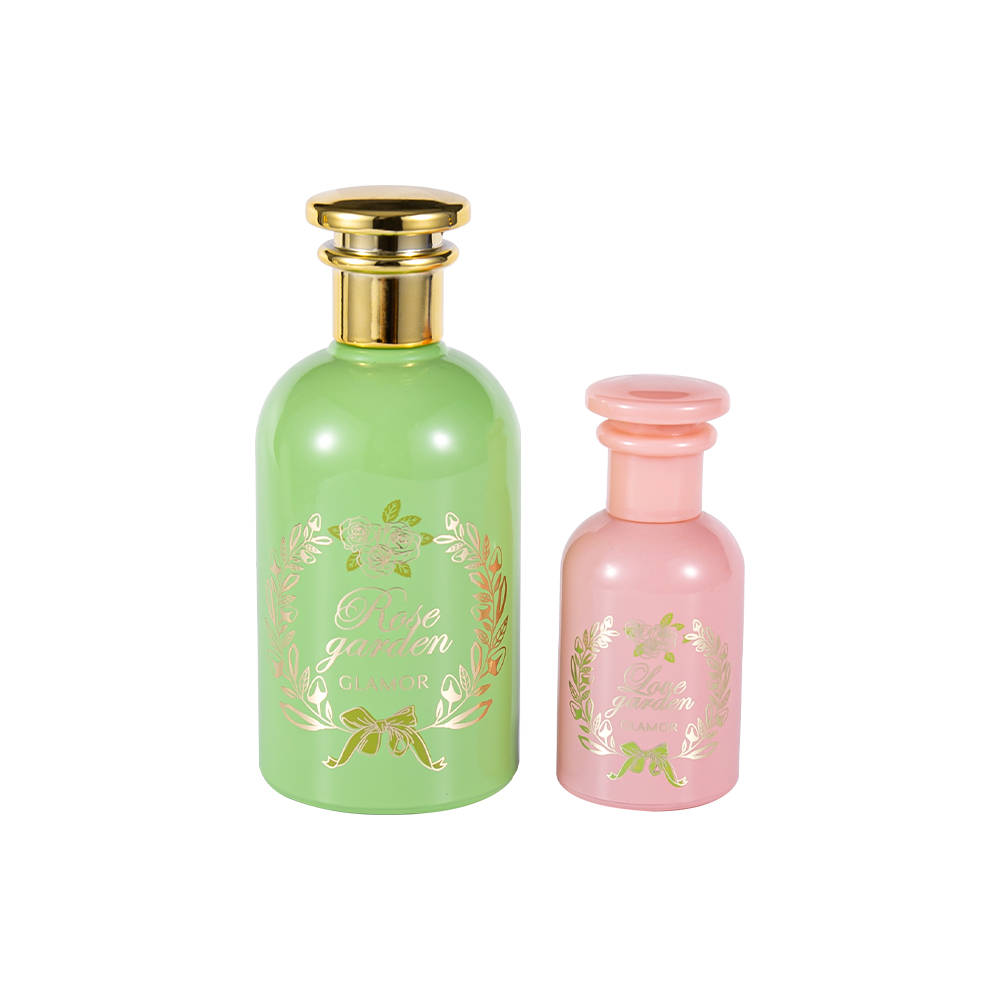 30ml Coated Gold Hot Stamping Perfume Bottle with PP CapThis 30ml glass bottle features an eco-friendly coating and gold hot stamping, paired with a PP cap and 15mm crimp neck. Supports various surface treatments for premium fragrance packaging.View Product →
Customization support separates a glass packaging manufacturer from a packaging trader. Real customization means the supplier can develop a custom glass bottle shape, engineer a matching cap, and assemble a complete perfume bottle set ready for filling. When you evaluate a glass packaging supplier, ask for the customization menu: mold development for capacities from 15ml travel sizes to 100ml eau de parfum bottles, accessory development with ABS, PP, Surlyn, K-resin, PCTA, PE, and acrylic caps, and a documented process for moving from drawing to first sample.
Do not skip the cap. A brand can source a beautiful bottle and then struggle to find a cap that matches the neck finish and weight. A factory that produces both bottles and caps removes this mismatch risk. When the surlyn cap, the UV-coated glass, and the hot-stamped logo come from the same quality system, component tolerances match and one supplier owns the whole quality issue.
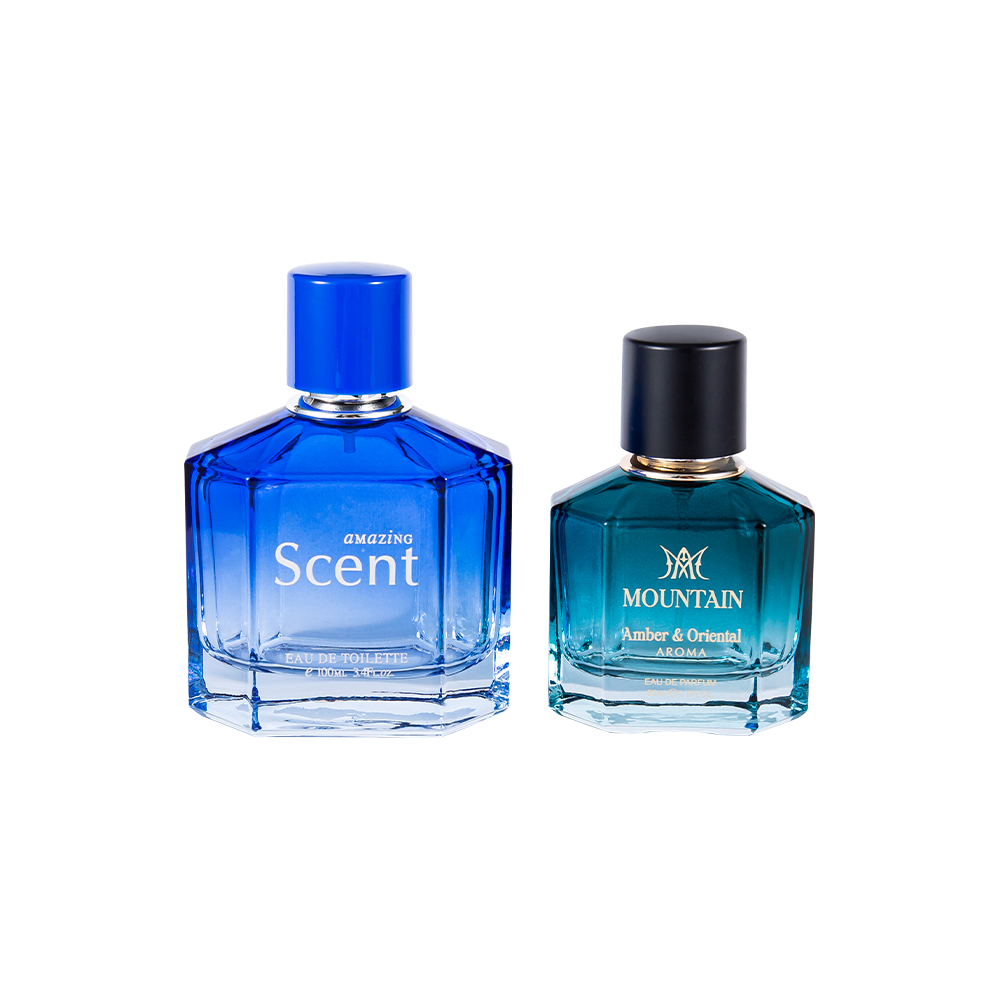 50ml Glass Perfume Bottle with Coating Printing and PP ABS UV CapThis 50ml glass bottle combines coating printing and hot stamping for textured decoration, paired with a PP/ABS UV cap. Ideal for brands seeking a complete bottle and cap set from one supplier.View Product →
Customization also extends to raw materials and sustainability claims. A supplier with documented ethical sourcing and a clear statement on glass is lower production energy footprint supports your own packaging sustainability message at retail. Ask whether the supplier can recycle glass cullet into the batch and whether the cap resin options include post-consumer material. For a deeper reference on selecting bottle sets by type and material, see the comprehensive guide to perfume bottle sets.
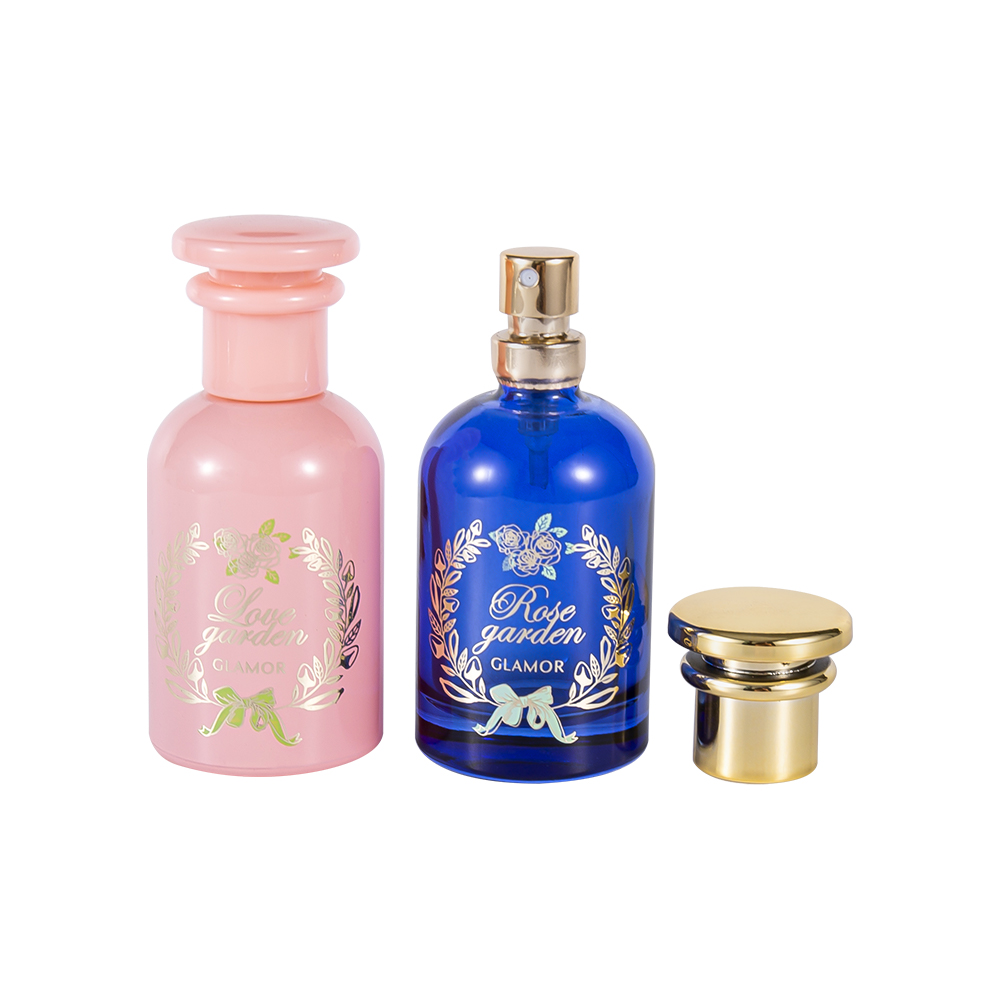
Decoration capability decides whether a bottle arrives at your filling line shelf-ready or still needs a third-party finisher. Full decoration support means coating, printing, hot stamping, and electroplating in one facility. When you evaluate a glass packaging supplier, request the exact process list: color-coated, gradient-coated, UV-coated, two-tone-coated, printed, hot-stamped, embossed, and frosted. Each process behaves differently with the perfume oil in your formulation, so the process list has a direct product-quality consequence.
For eau de parfum, a UV-protective coating slows scent degradation and prevents heavy alcohol from dulling the glass surface. The same coating that makes a bottle look premium can become a functional barrier for your formula. Decorated caps matter too. A UV-gold cap or a leather-wrapped cap changes the unboxing experience just as much as the bottle shape. A glass packaging supplier that owns these lines can protect your brand is tactile finish at scale.
Run physical tests on decorated samples. Rub a swab soaked in 95% alcohol across the coating, place the bottle under UV light, and check for adhesion failure. A supplier with in-house testing can give you the coating is solvent tolerance and abrasion rating. If the decoration is subcontracted, you inherit a quality risk you cannot monitor before shipping. For the science behind UV coating and scent preservation, read how UV-protective coatings preserve perfume in empty glass bottles.
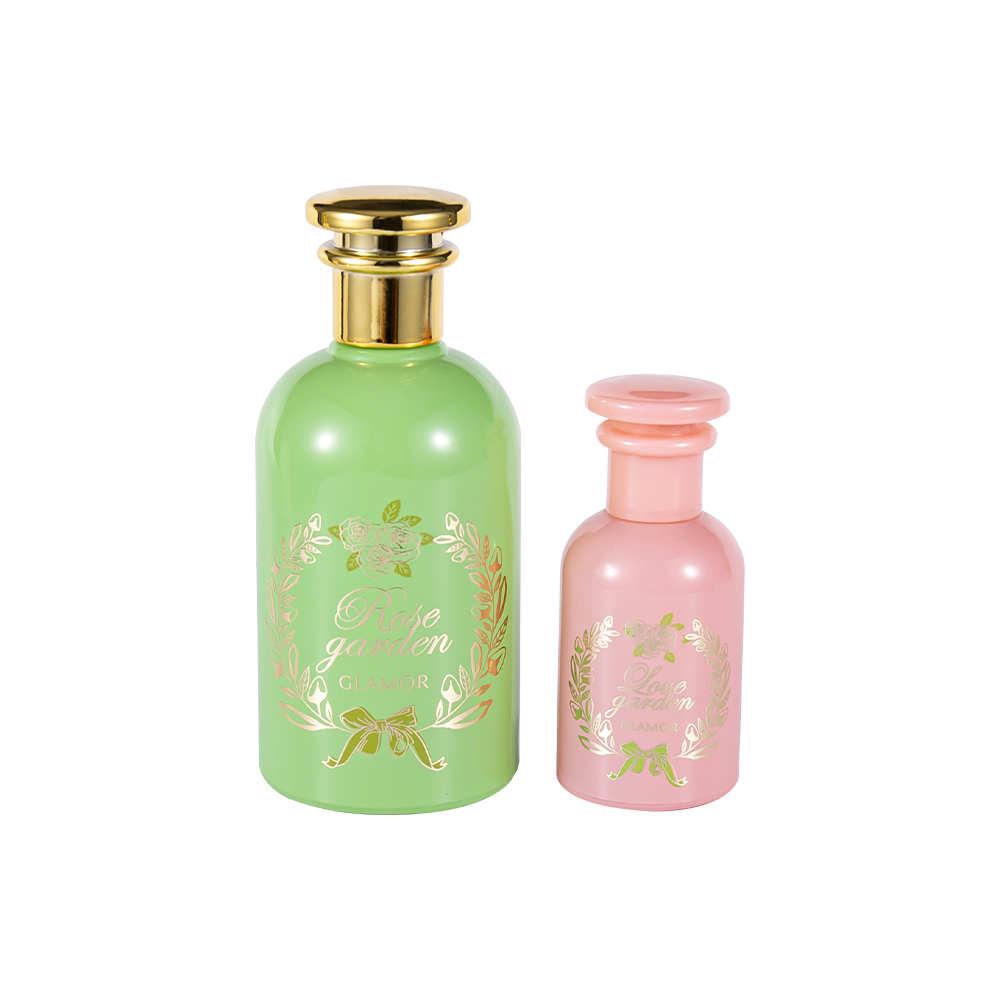 100ml Color Hot Stamping Perfume Bottle Set with UV Gold PP CapThis 100ml bottle features vibrant color hot stamping and a UV-treated gold PP cap, creating a premium contrast. Suitable for larger fragrance collections or gift sets seeking a distinctive look.View Product →
A scorecard removes subjective feeling from the decision. Weight the three dimensions according to your product strategy, then score each shortlisted supplier against the same criteria.
| Evaluation Dimension | Suggested Weight | What to Verify |
| Daily Output | 30% | Peak order capability, dedicated line allocation, color batch consistency |
| Customization Support | 35% | Mold development, cap material range, bottle plus cap integration |
| Decoration Capabilities | 35% | Coating, printing, hot stamping, in-house physical testing |
The following questions reflect the most common sourcing concerns from fragrance brand teams evaluating glass packaging suppliers.
A realistic MOQ depends on mold cost and decoration complexity. For a custom-shape bottle with gradient coating and hot stamping, suppliers typically require a run high enough to amortize mold tooling and line setup. Always ask for the MOQ per decoration level, not just per bottle design.
Glass bottle molds generally need six to eight weeks after engineering approval, plus a trial run of first samples. A supplier with an in-house mold workshop can compress this cycle because it controls tooling and cooling adjustments without a third party.
Yes. A glass packaging supplier that produces both bottles and caps is often the better choice for a perfume bottle set. It reduces logistics, shortens lead time, and gives you a single quality contact for component tolerance issues. HJ Glass Factory produces both bottles and caps at a daily scale of 1.4 million and 1 million units respectively.
Request decorated samples, run alcohol and pad rub tests, and verify UV coating compatibility with your perfume formula. Confirm whether the decoration is in-house. If a subcontractor performs it, ask for process capability data and wash resistance certificates.


+86 151 9036 6355
+86 510 8627 8328

hjglassfactory@vip.163.com

Room 1304, Jiufang Plaza, No. 286, Hongqiao South Road, Jiangyin City, Jiangsu Province, China
Copyright © 2025 HJ Glass Factory
All Rights Reserved.
Wholesale Empty Perfume Bottles, Empty Aromatherapy Bottles