English
 Español
Industry News
Home / News / Industry News / Glass vs Plastic Perfume Packaging: Why Glass Wins for Luxury and Sustainability
Sep 21, 2026
Content
Fragrance brands at the luxury end of the market keep hitting the same packaging question: glass or plastic? The answer is not a matter of preference but of measurable performance and brand positioning. Glass is the preferred choice for sustainable luxury fragrance brands because it preserves scent chemistry, qualifies for infinite recycling, and creates the tactile, weighty experience that consumers associate with premium value. HJ Glass Factory, which manufactures perfume bottles and bottle caps at a scale of 1.4 million glass bottles per day, sees this shift in procurement decisions from both new indie houses and established beauty groups.
Glass outperforms plastic in scent preservation, environmental life cycle, and perceived luxury. Those are the three factors that matter most when a fragrance brand selects packaging. Plastic has its place in travel formats and budget lines, but for a product positioned as fine fragrance, glass wins on the dimensions that buyers evaluate. The material choice also determines how the bottle interacts with light, how the cap fits, and how the finish photographs in retail listings.
| Property | Glass | Plastic (PET, PP, ABS) |
| Scent preservation | Non-porous and inert; no absorption over time | Can absorb fragrance compounds and alter the scent profile |
| UV protection | Blocked by coated or UV-coated finishes | Requires UV additives that weaken with exposure |
| Recyclability | Infinite closed-loop recycling | Downcycled one or two times before disposal |
| Perceived value | Heavy, cool, glossy; signals a premium product | Lightweight tactile feel; often read as budget-grade |
| Custom finishing | Frosted, gradient, hot stamping, UV, embossing | Limited surface treatment options |
Fragrance buyers evaluate these properties together during packaging audits. A brand that wants to be perceived as sustainable cannot ignore the end-of-life story, and a brand that sells a 50 ml bottle at a luxury price point needs a container that feels substantial in the hand. Glass delivers both, which is why it dominates the upper price tiers of the fragrance market.
The luxury fragrance category is built on sensory storytelling, and glass is the only packaging material that supports the full sensory narrative: weight, coolness, light refraction, and the audible click of a weighted cap. A 50 ml glass bottle typically weighs between 150 and 250 grams, while a plastic bottle of the same volume weighs 15 to 20 grams. That physical difference influences how a consumer holds the product and, ultimately, how they value it.
Surface complexity is another reason glass wins. Frosted glass softens light, gradient coating adds depth, and hot stamping applies metallic ornamentation that raises perceived value. Plastic cannot reliably reproduce these effects at the same level of consistency. For a perfumer, glass is not a container; it is part of the object that consumers are willing to display. The finish also protects the fragrance: a UV-coated glass bottle shields alcohol-based formulas from light-induced degradation, which keeps the top notes intact longer.
For brands creating a full perfume bottle set, the consistency between bottle, cap, and decorative details is critical to shelf presence. HJ Glass Factory supports this with in-house mold development and finishing capabilities that span color coating, UV coating, hot stamping, printing, frosting, and embossing.
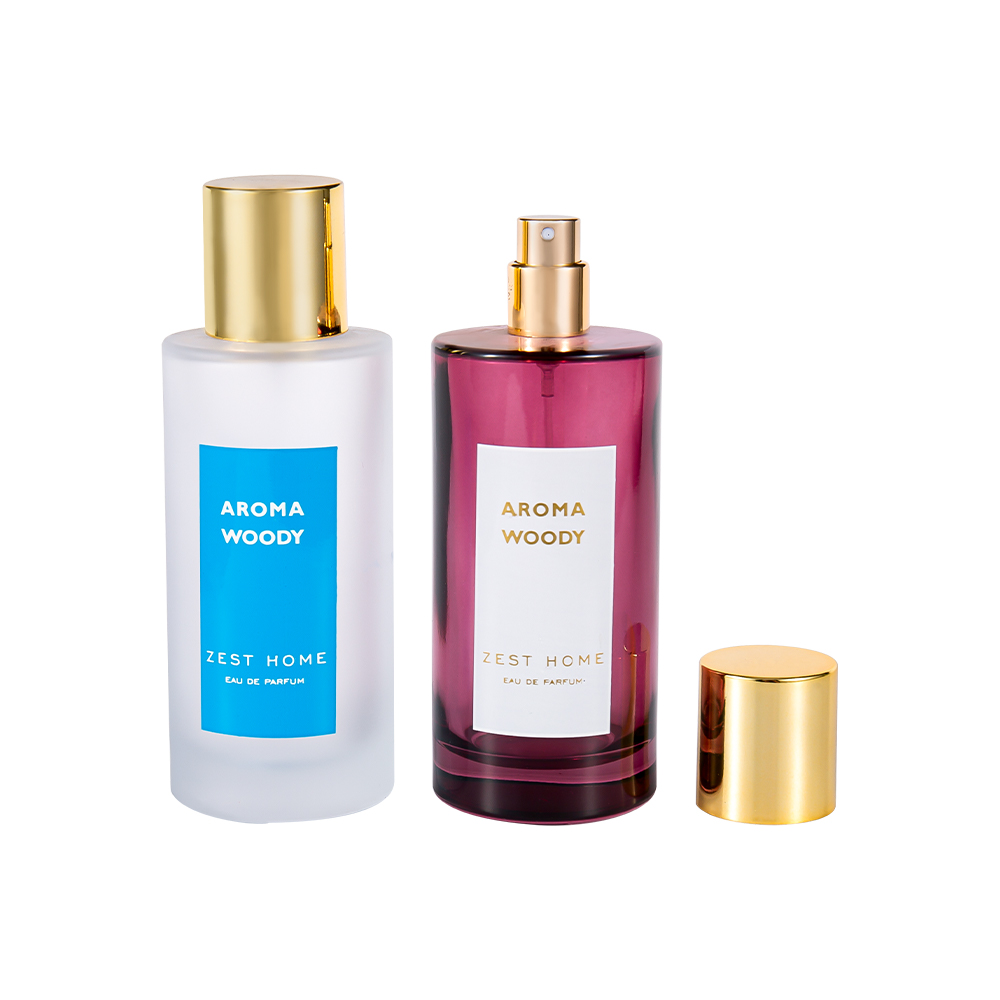 100ml Frosted Perfume Bottle with Gold Top for Premium Fragrance PackagingThis classic frosted bottle offers a matte finish and luxurious gold cap, ideal for high-end fragrances and gift sets. Its 100ml capacity and crimp neck support various decoration options, aligning with sustainable glass packaging trends.View Product →
Glass has a measurable sustainability edge when its afterlife is accounted for. Glass can be recycled endlessly without quality loss; plastic is typically downcycled into lower-grade products or ends up in landfills. In Europe, post-consumer glass bottle recycling rates average around 74%, while the plastic recycling rate for packaging is estimated at less than 44%. These are the numbers that make glass the defensible choice for brands that commit to circular packaging claims.
Glass vs Plastic: Industry Benchmark Comparison
Published industry benchmarks for packaging materials.
The production energy argument is more nuanced. Glass melting requires higher furnace temperatures, but using recycled cullet reduces the energy needed by roughly 25 to 30% for every 10% increase in cullet content. Since glass does not degrade during recycling, a single glass bottle can become another glass bottle generation after generation. Plastic, by contrast, loses polymer quality at every reprocessing step, which means the material ultimately becomes waste or lower-value products.
| Factor | Glass | Plastic |
| Recycling cycles | Infinite | 1 to 2 cycles before downcycling |
| Raw material | Silica sand, natural mineral | Petroleum-derived resins |
| Furnace energy | High, offset by cullet | Lower initial processing |
| Post-consumer recycling rate | Around 74% in the EU | Less than 44% globally |
Fragrance brands that communicate a sustainable story should be aware that glass recycling is a closed loop. That makes glass packaging a defensible sustainability claim rather than a marketing abstraction.
Choosing glass for a fragrance brand means access to finishing techniques that create a recognizable shelf identity: frosted, color-coated, gradient, UV-coated, hot stamped, and embossed surfaces that plastic cannot replicate. It also means finding a partner who can deliver those finishes consistently at volume.
HJ Glass Factory reports a daily production capacity of 1.4 million glass bottles and 1 million caps. The factory supports custom mold development, accessory development, and multiple cap materials including ABS, PP, Surlyn, K-resin, PCTA, PE, and acrylic. This is not a packaging niche; it is a production scale that can handle orders for independent perfumers and global beauty groups alike.
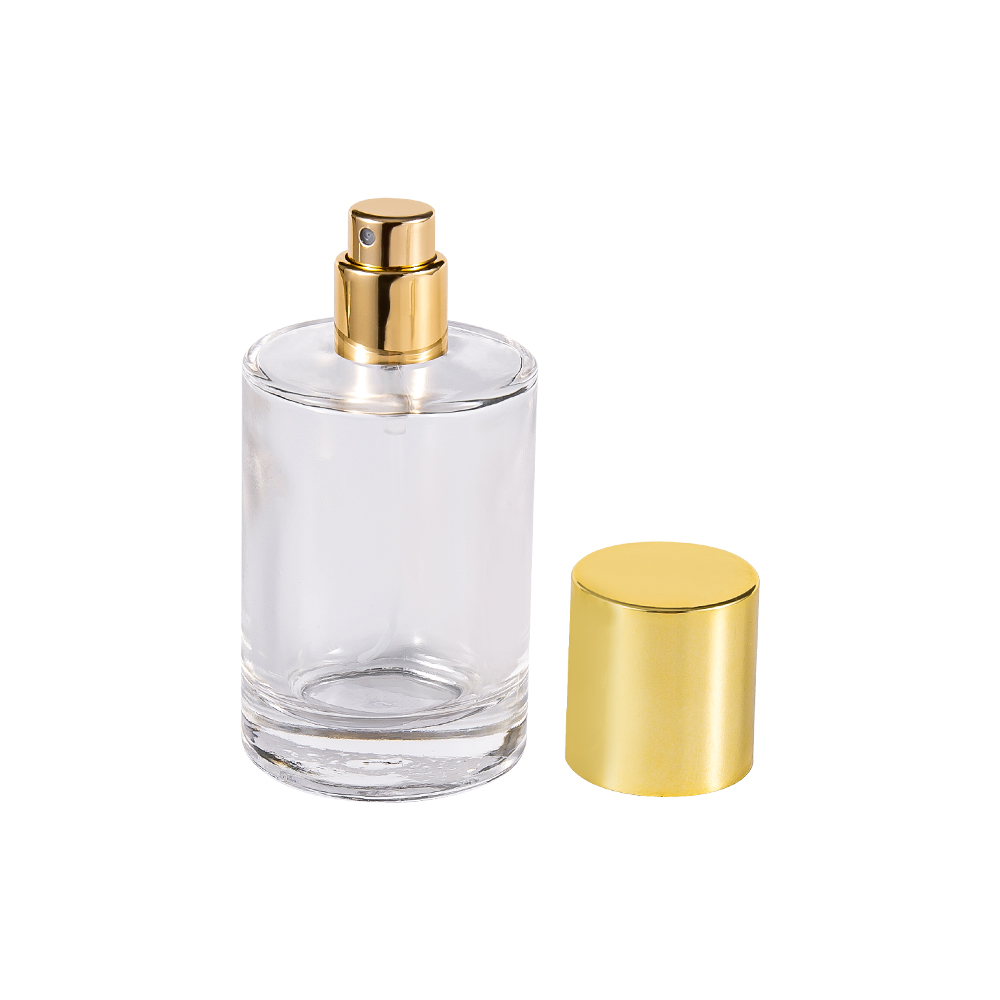 50ml Transparent Cylindrical Perfume Bottle with UV Gold PP CapA clear glass bottle with a cylindrical silhouette and UV-treated gold PP cap. The 50ml size suits standard retail, and the cap's durable finish complements the transparent body for a contemporary presentation.View Product →
Bottle caps are not an afterthought in the glass-first strategy. The right cap material changes the user experience: Surlyn and acrylic caps have a glass-like weight and scratch resistance, while ABS and PP are more cost-efficient for higher-volume runs. HJ Glass Factory produces 1 million caps per day, allowing brands to source a complete bottle and cap solution from a single factory. That reduces the supply-chain friction that often appears when bottle and cap come from different suppliers.
When a perfume brand decides to move from plastic to glass, there are a few supply-chain realities to plan for. Development cycles for custom molds and tooling can take eight to twelve weeks, and first production runs require qualification of colors and coatings. This is a normal timeline for an established factory, but it should be accounted for in a brand launch plan.
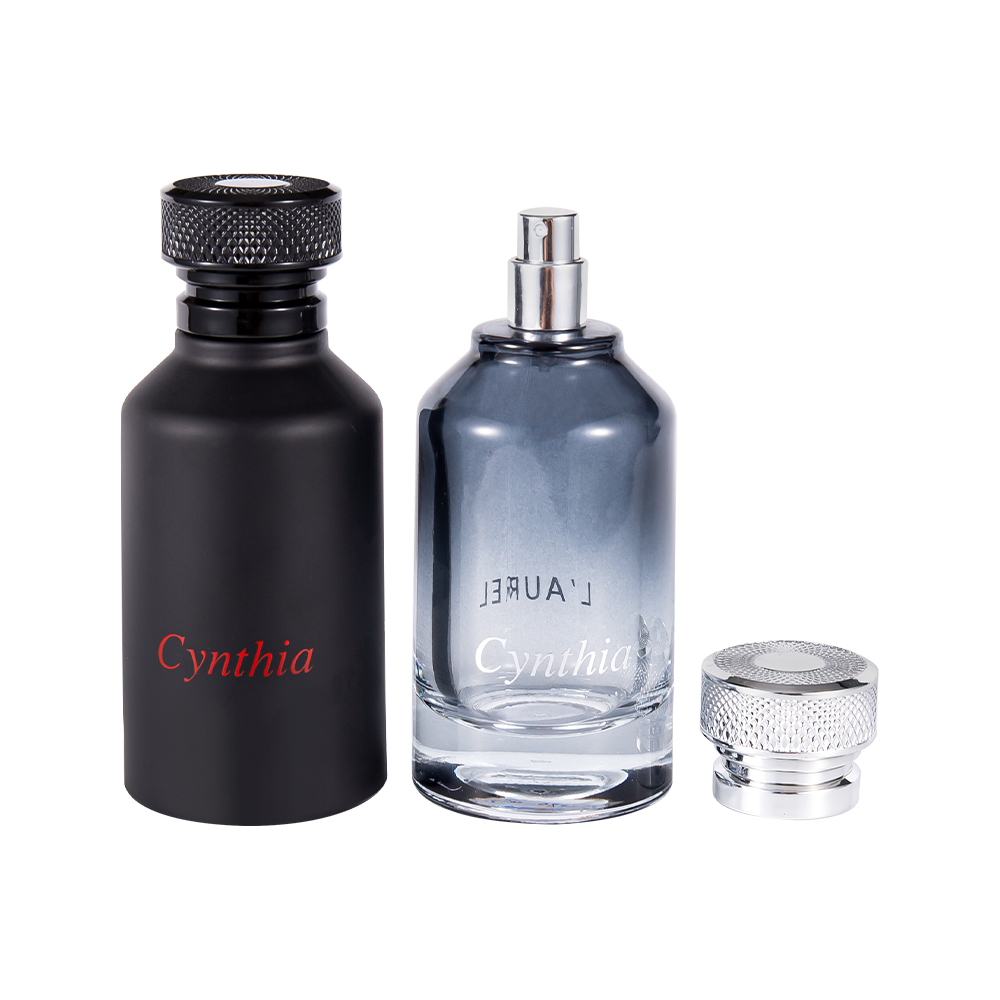 100ml High-End Perfume Packaging Set with Large Flow Spray OptionsThis packaging set includes a 100ml bottle with a large flow spray mechanism offering 0.12CC and 0.15CC outputs. Designed for luxury eau de parfum, it supports efficient application while maintaining premium aesthetics.View Product →
Select glass when your fragrance has a higher perceived value, a luxury price point, or a need for UV-sensitive formulations. Choose plastic only for budget formats or travel sizes where weight is the dominant constraint.
The key is alignment: the packaging should match the brand's declared material values. If a brand says "sustainable," glass offers the strongest supporting evidence. If a brand says "affordable everyday," plastic has a genuine functional role, but it must be communicated honestly.
Practical example: a 30 ml eau de parfum at a 60 USD retail price point is a strong candidate for a frosted glass bottle with a Surlyn cap. The same fragrance at 12 USD in a body mist format is better served by a recyclable plastic bottle. The material should not be chosen in isolation from the pricing, the scent concentration, and the brand communication strategy.
For a deeper look at how materials and bottle types influence customer choices, read the comprehensive guide to perfume bottle sets types and materials, and explore available perfume bottle set options that pair decorative bottles with matching caps and sprayers.
Plastic is generally cheaper on raw material price and mold cost, but the comparison changes when you include brand value, product integrity, and lifetime recycling. Glass bottles can be produced at competitive prices at industrial scale, especially when using stock molds combined with custom finishes.
Yes. Glass made with recycled cullet reduces energy during production, and because glass can be recycled infinitely, every bottle has a pathway to becoming another product. Sustainable glass production is complemented by responsible raw material sourcing and closed-loop return programs.
Glass is chemically inert and non-porous. It does not absorb aromatic molecules the way some plastics can, which means the fragrance profile stays stable for longer. UV-coated glass also protects perfume oils from light-induced degradation.
Manufacturers typically offer capacity ranges from 15 ml to 100 ml or more. HJ Glass Factory offers perfume bottle sets in 15 ml, 30 ml, and 50 ml formats plus 100 ml bottles, with matching caps and spray nozzles available for the same line.


+86 151 9036 6355
+86 510 8627 8328

hjglassfactory@vip.163.com

Room 1304, Jiufang Plaza, No. 286, Hongqiao South Road, Jiangyin City, Jiangsu Province, China
Copyright © 2025 HJ Glass Factory
All Rights Reserved.
Wholesale Empty Perfume Bottles, Empty Aromatherapy Bottles