English
 Español
Industry News
Home / News / Industry News / Flint vs. Amber vs. Borosilicate: A Technical Comparison of Empty Glass Diffuser Bottles for Home Fragrance Applications
Jun 22, 2026
Content
The global home fragrance market has experienced remarkable growth over the past decade. Consumers increasingly seek to create personalized, aromatic environments in their living spaces. Among the various delivery methods available, the reed diffuser stands out as a safe, flame free, low maintenance option for continuous fragrance dispersion.
At the heart of every reed diffuser is the glass bottle. The empty glass diffuser bottle is not merely a container. It must hold the fragrance oil or diffuser base securely, allow proper capillary action through the reeds, prevent leakage, and complement the decor of the room where it sits. The choice of glass type, shape, neck design, and closure significantly affects both the functional performance and the aesthetic appeal of the final product.
This article provides a comprehensive technical comparison of empty glass diffuser bottle types, including flint clear, amber, cobalt blue, and borosilicate glass options. We will examine glass material properties, hydrolytic resistance, neck finish designs, capacity considerations, and closure systems. For home fragrance brand owners and packaging procurement professionals, this guide serves as a reference for selecting the appropriate diffuser bottle that balances fragrance stability, dispersion efficiency, visual appeal, and cost.
An empty glass diffuser bottle is a container specifically designed to hold fragrance oil or a diffuser base solution for use with reed sticks. The bottle must enable the reeds to draw liquid upward through capillary action, allowing the fragrance to evaporate slowly into the surrounding air .
The typical reed diffuser bottle has a narrow neck that accommodates the reed bundle while minimizing the open surface area of the liquid. This neck design reduces evaporation directly from the bottle surface, ensuring that most of the fragrance loss occurs through the reeds. The bottle body is wider, providing stability and a reservoir of fragrance.
Standard capacities for empty glass diffuser bottles range from 50 milliliters to 500 milliliters. The 100 milliliter size is the most common for consumer products, offering a balance of longevity and affordability . Smaller 50 milliliter bottles are used for travel sizes or introductory products. Larger 200 to 500 milliliter bottles are used for commercial spaces or extended use home fragrance.
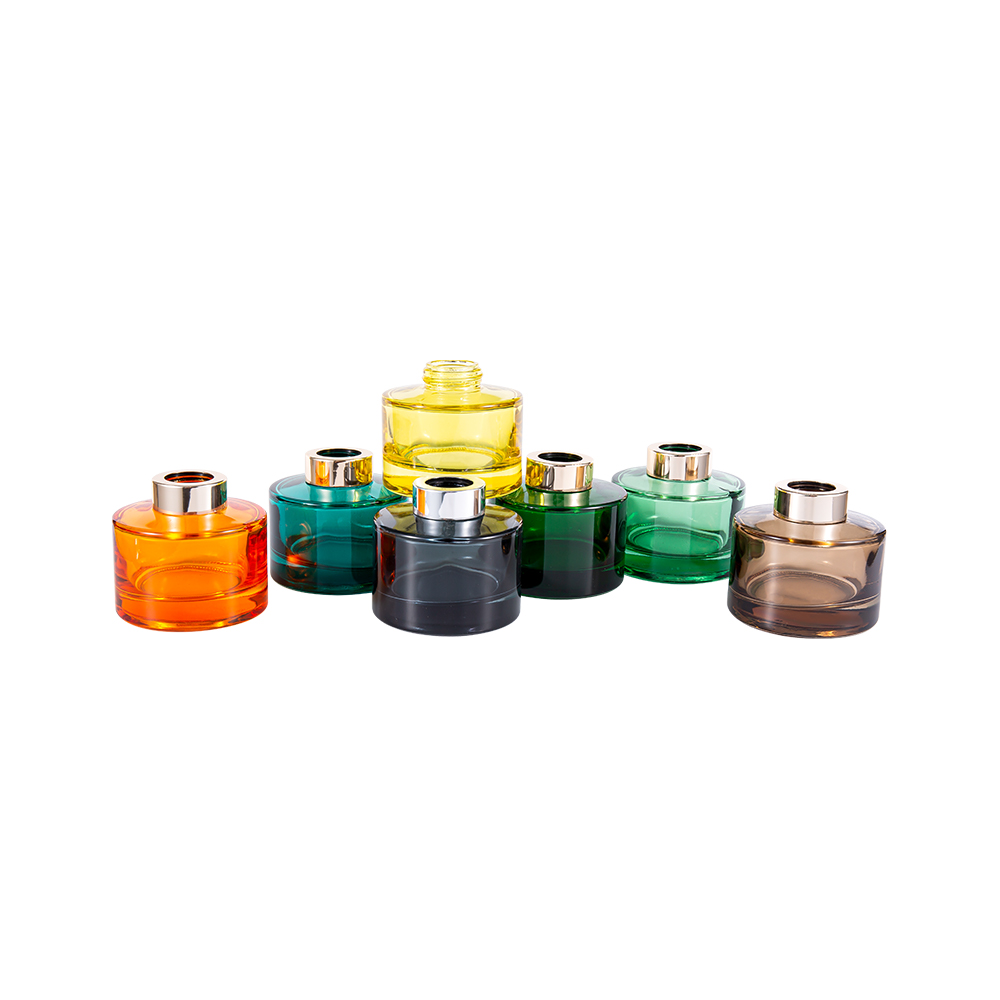
The bottle shape varies widely. Cylindrical bottles are classic and versatile. Square or rectangular bottles offer a modern aesthetic. Apothecary style bottles with curved shoulders evoke a vintage, artisanal feel. Conical or tapered bottles provide a contemporary silhouette .
When you select an Empty Glass Diffuser Bottle, you are selecting a component that must work seamlessly with reed sticks, fragrance oils, and decorative closures. Each element affects the overall performance and consumer experience.
The choice of glass type affects the protection of the fragrance oil, the visual presentation, and the cost of the diffuser bottle.
Flint clear glass is the standard for most reed diffuser bottles. It has very low iron content, giving it exceptional transparency. The consumer can see the color of the fragrance oil and the remaining liquid level. This visibility is a practical advantage, allowing the user to know when to refill. However, flint clear glass does not block UV light. Prolonged exposure to sunlight can degrade many fragrance oils, causing color changes and scent deterioration.
Amber glass contains iron, sulfur, and carbon additives that give it a brown color. This coloration blocks 99 percent of UV light below 450 nanometers, providing excellent protection for light sensitive fragrance formulations. Natural essential oils, particularly citrus oils, benefit significantly from amber glass protection. The amber color imparts a warm, apothecary aesthetic that many consumers find appealing . The trade off is that the amber color obscures the liquid, making it impossible to see the remaining fragrance level or color.
Cobalt blue glass provides a distinctive deep blue color that is strongly associated with premium, luxury home fragrance products. It blocks a significant portion of UV light, though less than amber. The blue glass creates a striking visual presentation that stands out on retail shelves. Cobalt blue is more expensive than flint or amber due to the cost of the cobalt oxide colorant .
Borosilicate glass is a premium material known for its high thermal shock resistance and chemical durability. Borosilicate glass contains boron trioxide, which gives it a very low coefficient of thermal expansion. This glass is less common for standard diffuser bottles but is used for high end or specialty products. Borosilicate glass has excellent hydrolytic resistance, meaning it is highly resistant to the release of alkali ions into the liquid .
The table below summarizes glass type options for empty glass diffuser bottles.
| Glass Type | UV Protection | Liquid Visibility | Aesthetic | Cost | Hydrolytic Resistance | Best Application |
|---|---|---|---|---|---|---|
| Flint Clear | Low | Full clarity | Clean, modern | Low | Standard | Most diffusers |
| Amber | Very high (99%) | Obscured | Warm, apothecary | Low | Standard | Light sensitive oils |
| Cobalt Blue | Moderate to high | Low tint | Premium, luxury | High | Standard | Niche, designer brands |
| Borosilicate | Depends on color | Clear | Technical, premium | Very high | Very high | High end, specialty |
For most home fragrance applications, flint clear glass is appropriate and cost effective. For natural essential oil blends containing citrus or other light sensitive components, amber glass provides superior protection.
The chemical durability of glass is measured by its hydrolytic resistance, which refers to the glass resistance to the release of alkali ions when in contact with water based or alcohol based solutions. This property is particularly relevant for reed diffuser bottles because fragrance oils and diffuser bases may contain water, alcohol, or other polar solvents.
Glass is primarily composed of silicon dioxide (SiO2), but also contains sodium and calcium oxides. In the presence of water, sodium ions can leach out of the glass surface, forming sodium hydroxide. This alkaline solution can raise the pH of the fragrance formulation, potentially causing saponification of certain ingredients or degradation of other components .
Hydrolytic resistance is classified according to international standards such as ISO 719. The classification ranges from Type I (highest resistance) to Type III (standard resistance). Type I glass is borosilicate glass. Type II glass is soda lime glass with a treated inner surface. Type III glass is standard soda lime glass without treatment .
For reed diffuser applications, Type III soda lime glass is almost always sufficient because most diffuser bases are non polar oils such as DPG or mineral oil. These carriers do not promote alkali leaching. However, for diffuser formulations with significant water or alcohol content, Type I borosilicate glass may be considered.
The quality of the glass manufacturing also affects chemical durability. Proper annealing, the controlled cooling process after forming, removes internal stresses and creates a more stable glass surface. Poorly annealed bottles are more susceptible to chemical attack.
When sourcing empty glass diffuser bottles, request documentation of the glass type and hydrolytic resistance classification from the manufacturer. A reputable supplier will provide this information and test bottles for chemical durability.
The neck of the diffuser bottle is a critical functional element. The neck diameter determines how many reeds can be inserted and how well the bundle is held in place.
Standard diffuser bottles have neck openings ranging from 15 to 28 millimeters. A 15 to 18 millimeter neck is suitable for 3 to 5 reeds, appropriate for smaller spaces such as bathrooms or offices. A 20 to 24 millimeter neck can accommodate 6 to 8 reeds, suitable for living rooms or medium sized spaces. A 28 millimeter neck can hold 10 or more reeds, appropriate for large spaces or commercial applications .
The neck finish can be threaded or smooth. Threaded necks accept screw on caps or closures. These are common for diffuser bottles that may be shipped with a cap to prevent leakage before use. Smooth necks are designed for cork stoppers or decorative closures that fit snugly without threading.
The neck shape also affects reed performance. A straight neck allows reeds to sit vertically, maximizing the wetted length. A tapered neck may bundle the reeds more tightly, which can reduce evaporation rate but also reduce the risk of the reeds falling out.
For optimal performance, the neck opening should be large enough to allow airflow around the reeds. If the reeds fit too tightly, the reduced airflow slows evaporation, and the diffuser produces less fragrance. If the neck is too wide, the reeds may fall over or out of the bottle.
When selecting an empty glass diffuser bottle, consider the intended reed count. Request samples of the bottle with your chosen reeds to verify fit and airflow before committing to large scale production.
The width of the bottle mouth affects both the evaporation rate and the visual presentation of the diffuser.
Narrow mouth diffuser bottles have neck openings of 15 to 20 millimeters. These bottles support a smaller number of reeds, typically 3 to 5. The evaporation rate is lower, meaning the diffuser lasts longer. Narrow mouth bottles have a more elegant, delicate appearance. They are suitable for smaller spaces and for fragrance blends that are strong and do not require many reeds.
Wide mouth diffuser bottles have neck openings of 22 to 28 millimeters or more. These bottles accommodate 8 to 12 reeds. The evaporation rate is higher, producing stronger fragrance throw. Wide mouth bottles have a bolder, more substantial appearance. They are suitable for large spaces and for subtle fragrance blends that require more reeds to achieve adequate throw.
The table below compares narrow mouth and wide mouth empty glass diffuser bottles.
| Parameter | Narrow Mouth (15-20mm) | Wide Mouth (22-28mm+) |
|---|---|---|
| Reed Capacity | 3 to 5 reeds | 8 to 12+ reeds |
| Evaporation Rate | Lower, longer lasting | Higher, stronger throw |
| Space Suitability | Bathrooms, offices, bedrooms | Living rooms, open plan, commercial |
| Fragrance Strength | Moderate with strong oils | Strong with subtle oils |
| Aesthetic | Delicate, elegant | Bold, substantial |
| Best Application | Personal spaces, subtle scents | Public spaces, statement scents |
Some wide mouth bottles are designed with a reducer insert or a separate collar that holds the reeds in a bundle. This approach allows the same bottle to be used with different reed counts by changing the insert.
The liquid that goes into an empty glass diffuser bottle is typically not pure essential oil. Most commercial reed diffusers use a carrier base or solvent that dilutes the fragrance oil and controls the evaporation rate.
The two most common diffuser bases are DPG (dipropylene glycol) and mineral oil. DPG is a synthetic solvent that is miscible with many fragrance oils. It has a low evaporation rate and is not volatile. DPG is the industry standard for reed diffusers because it produces consistent, predictable evaporation . DPG has a slight sweet odor of its own, which can affect the fragrance profile.
Mineral oil is a non volatile, non polar oil. Reed diffusers using mineral oil rely entirely on capillary action to move liquid up the reeds, where it then evaporates. Mineral oil does not have its own odor, so it does not alter the fragrance. However, some essential oils are not fully miscible with mineral oil. Pure essential oils in mineral oil may separate or fail to climb the reeds effectively .
The choice of diffuser base affects the compatibility requirements for the glass bottle. DPG and mineral oil are non polar and do not aggressively leach alkali from glass. Standard soda lime glass is sufficient. However, some fragrance formulations may contain alcohol or water. These polar solvents can interact with the glass surface. For alcohol based or water based diffuser formulations, borosilicate glass or specially treated glass may be required to prevent chemical interaction.
When sourcing diffuser bottles, inform the manufacturer of the intended diffuser base and fragrance formulation. This allows them to recommend the appropriate glass type and any necessary internal surface treatments.
The closure for an empty glass diffuser bottle serves multiple functions. During shipping and storage, the closure must seal the bottle to prevent leakage. During use, the closure may be replaced by the reeds, or the reeds may pass through a hole in the closure.
Cork stoppers are a popular choice for reed diffuser bottles. Natural cork is permeable, allowing minimal airflow, but is not completely airtight. Cork stoppers often have a hole drilled through the center to hold the reed bundle. The cork provides a secure fit and a natural, artisanal appearance. Cork is renewable and biodegradable .
Metal screw caps with a reed hole are common for mass market diffusers. The cap is made from aluminum or steel, often finished in gold, silver, black, or white. The cap has a hole or multiple holes through which the reeds pass. The cap provides a clean, modern look and a very secure closure during shipping. The metal finish can be coordinated with the bottle decoration.
Plastic closures are the most economical option. Plastic caps may be injection molded and can incorporate reed holes or slots. Plastic is lightweight and cost effective but has a lower perceived value than cork or metal.
Rubber or silicone stoppers are used for high end or specialty diffusers. These materials provide an excellent seal and can be molded with precise reed holes. The elasticity holds the reeds firmly in place.
When selecting a closure, consider the shipping requirements. The closure must not leak during transport. For cork stoppers, a heat shrink seal or tape over the stopper adds security. For metal or plastic caps, an inner liner or seal ensures leak resistance.
The choice between clear glass and colored glass diffuser bottles affects both product protection and aesthetic appeal.
Clear glass bottles, typically flint or flint-like formulations, offer full visibility of the fragrance oil. The consumer can see the beautiful color of the liquid and monitor the remaining volume. Clear glass is versatile and matches any decor style. The primary disadvantage is the lack of UV protection. Fragrance oils left in direct sunlight may degrade.
Colored glass bottles, in amber, cobalt blue, or other colors, provide UV protection that preserves the fragrance oil. The colored glass also creates a distinctive, premium appearance. Amber bottles evoke an apothecary or natural aesthetic. Cobalt blue bottles signal luxury and sophistication. The trade off is reduced visibility of the liquid.
The table below compares clear glass and colored glass diffuser bottles.
| Parameter | Clear Glass | Colored Glass (Amber, Cobalt) |
|---|---|---|
| UV Protection | Low | High |
| Liquid Visibility | Full | Obscured or tinted |
| Aesthetic | Clean, versatile | Warm, premium, distinctive |
| Fragrance Protection | Good for indoor indirect light | Excellent for light sensitive oils |
| Consumer Appeal | Practical, modern | Premium, artisanal |
| Cost | Lower | Higher for cobalt, moderate for amber |
For diffuser products positioned as natural, organic, or aromatherapy, amber glass reinforces the natural positioning while providing functional UV protection. For luxury or designer diffusers, cobalt blue glass creates a strong visual statement. For mass market diffusers sold in opaque packaging, clear glass is the most cost effective.
The shape of an empty glass diffuser bottle affects both aesthetic appeal and functional stability.
Cylindrical bottles are the most common shape. They are stable, easy to manufacture, and fit standard reed bundles well. Cylindrical bottles have a classic, versatile appearance that works in any setting.
Square or rectangular bottles offer a modern, architectural look. They are less common than cylindrical bottles and may have different stability characteristics. A wide square base is very stable. A tall, narrow square bottle may be less stable and prone to tipping.
Apothecary bottles have curved shoulders and a wide body tapering to a narrow neck. This classic shape evokes vintage pharmacies and apothecaries. The wide body provides stability, and the narrow neck controls evaporation. Apothecary bottles are popular for natural and artisanal brands.
Conical or tapered bottles have a wider base and narrower top. This shape is inherently stable because the center of gravity is low. The wide base provides excellent resistance to tipping . Conical bottles have a contemporary, sculptural appearance.
Fluted bottles have vertical ribs or ridges on the surface. The fluted texture adds visual interest and a tactile quality. The ridges can also make the bottle easier to grip. Fluted bottles are common in premium and luxury diffuser lines.
When selecting a bottle shape, consider the intended display location. A diffuser that will sit on a narrow shelf needs a stable base. A diffuser that will be handled frequently needs a shape that is easy to grip. The bottle should complement the decor of the intended room.
Decoration transforms a plain glass diffuser bottle into a branded, marketable product. Several techniques are available, each with different cost, capability, and visual effect.
Silk screen printing applies ink through a mesh screen onto the glass surface. Each color requires a separate screen. Silk screening is excellent for logos, brand names, and simple patterns. The print is durable and resistant to handling. Silk screening is cost effective for medium to large production runs. The limitation is that only flat or gently curved surfaces work well.
Spray painting applies a thin layer of colored or clear lacquer to the glass surface. The spray can be matte, gloss, satin, or textured. Spray painting can cover the entire bottle or be applied in patterns. Colored spray can coordinate with the brand identity or fragrance theme. The process is moderately expensive and requires careful quality control.
Frosting creates a matte, translucent surface by chemically or mechanically abrading the glass. The frosted finish has a soft, elegant appearance. Frosting can be applied to the entire bottle or in patterns. The process is moderately expensive and durable.
Labeling is the simplest decoration method. A paper or plastic label is applied to the bottle. Labels are cost effective for small production runs and allow high resolution, full color graphics. The label must be resistant to oil and handling.
For reed diffuser bottles, the closure can also be decorated. Metal caps can be plated or painted. Cork stoppers can be branded with a hot stamp or laser engraving.
When planning decoration, ensure that the finishes are compatible with the intended use. Some paints or coatings may be affected by fragrance oil spills. Labels must have oil resistant adhesives.
The selection of the right empty glass diffuser bottle requires balancing multiple factors. The fragrance formulation determines the need for UV protection and glass chemical compatibility. The brand positioning determines the appropriate shape, color, and closure material. The retail environment determines the necessary stability and visual impact.
For a natural essential oil diffuser with light sensitive citrus or floral notes, select amber glass bottles. The UV protection will preserve the fragrance, and the warm apothecary aesthetic reinforces the natural brand positioning. Choose a cork closure for an artisanal feel. Select a narrow neck bottle with 3 to 5 reeds for a smaller space.
For a luxury home fragrance diffuser, select cobalt blue glass or fluted clear glass. The distinctive color or texture signals premium quality. Choose a metal cap with a metallic finish coordinated with the bottle. Select a wide mouth bottle with 8 to 10 reeds for strong scent throw in larger spaces.
For a mass market diffuser sold at competitive price points, select flint clear glass. The low cost and full liquid visibility appeal to value conscious consumers. Choose a plastic closure with a reed hole. Use simple silk screening for the logo.
For a diffuser intended for a commercial space such as a hotel lobby or spa, select a large capacity bottle of 200 to 500 milliliters . Choose a stable shape such as a wide base cylinder or cone. Use an amber bottle to protect the fragrance from prolonged light exposure in public spaces.
By understanding the technical differences and performance characteristics presented in this article, home fragrance brand owners and packaging procurement professionals can confidently select the right empty glass diffuser bottle for each product line, ensuring fragrance stability, effective dispersion, and consumer satisfaction.
Q1: What is the difference between flint clear and amber glass for diffuser bottles?
A: Flint clear glass is crystal clear, allowing full visibility of the fragrance oil color and remaining liquid level. However, it does not block UV light, which can degrade light sensitive fragrance oils over time. Amber glass contains additives that block 99 percent of UV light, providing excellent protection for light sensitive formulations such as citrus or natural essential oils. The trade off is that the amber color obscures the liquid. Choose flint for most applications; choose amber for natural or light sensitive fragrances.
Q2: What neck size should I choose for my diffuser bottle?
A: The neck size determines how many reeds can be used. A 15 to 18 millimeter neck accommodates 3 to 5 reeds, suitable for smaller spaces such as bathrooms or offices. A 20 to 24 millimeter neck accommodates 6 to 8 reeds, suitable for living rooms or medium spaces. A 28 millimeter neck can hold 10 or more reeds, suitable for large spaces or commercial applications. Consider the size of the room and the strength of your fragrance oil when selecting neck size .
Q3: Can I use pure essential oil in a reed diffuser bottle without a base?
A: Pure essential oils can be used, but there are trade offs. Essential oils are expensive, and using them undiluted increases cost significantly. The evaporation rate of pure essential oils varies by oil type, making it difficult to achieve consistent performance. Some essential oils are not fully volatile and may leave residues. Most commercial diffusers use a carrier base such as DPG to control the evaporation rate and reduce cost. If you use pure essential oils, use fewer reeds to reduce the evaporation rate .
Q4: What is hydrolytic resistance and why does it matter for diffuser bottles?
A: Hydrolytic resistance refers to the glass ability to resist the release of alkali ions when in contact with liquids. For standard diffuser bases such as DPG or mineral oil, hydrolytic resistance is not a significant concern because these are non polar oils. However, for diffuser formulations with high water or alcohol content, the liquid can leach alkali from the glass, potentially altering the pH and degrading the fragrance. Standard soda lime glass is sufficient for most diffusers; borosilicate glass provides higher chemical resistance for specialty formulations .
Q5: How do I prevent my diffuser bottle from leaking during shipping?
A: Leak prevention requires a properly sealed closure. For cork stoppers, use a heat shrink seal or tape over the stopper and bottle neck. For metal or plastic caps, ensure the cap liner is compatible with the diffuser base and that the cap is torqued correctly. Some manufacturers ship the bottle with a solid cap and include the reed holding cap or collar separately for the consumer to install. This approach eliminates the risk of leakage through reed holes during transit.


+86 151 9036 6355
+86 510 8627 8328

hjglassfactory@vip.163.com

Room 1304, Jiufang Plaza, No. 286, Hongqiao South Road, Jiangyin City, Jiangsu Province, China
Copyright © 2025 HJ Glass Factory
All Rights Reserved.
Wholesale Empty Perfume Bottles, Empty Aromatherapy Bottles