English
 Español

Industry News
Home / News / Industry News / Glass Packaging Sustainability: Why It Is Now a Must for Perfume Brands
Nov 16, 2026
Content
A 100 ml perfume bottle weighs about 110 grams when it leaves the furnace. The same volume in PET resin weighs roughly 18 grams. That ratio is the whole glass packaging sustainability debate in one line, and it explains why brand owners stopped treating glass as automatically greener around 2022 and started asking suppliers for cradle-to-gate figures instead.
Both halves of that comparison are true, and neither one settles the question. Sustainability is becoming a must in glass packaging because the cost of ignoring it now arrives as regulation, retailer data requests and consumer scrutiny, and because the decisions that determine whether a glass bottle performs well are made at the specification stage, long before a mould is cut.
Sustainability turned into a requirement because three external forces now attach a measurable price to packaging decisions: regulation, retail data demands and consumer verification. None of them can be answered with a brochure claim.
Definition: design for recyclability in glass packaging means specifying a container that existing collection and sorting systems can process without downcycling. In practice that means a glass body free of full-body plastic sleeves, a closure that is mono-material or removable by hand, and decoration applied as a surface treatment rather than a bonded plastic layer.
HJ Glass Factory, the perfume and diffuser glass manufacturer behind hjglassfactory.com, publishes capability data alongside its sustainability position: 1.4 million bottles and 1 million caps per day, custom moulds, and in-house spray coating, printing, electroplating and hot stamping. Output at that scale matters to sustainability planning, because cullet supply, colour control and repeatable wall thickness are all easier to hold on a high-throughput line than in a batch workshop.
Per kilogram, container glass carries a lower carbon footprint than virgin plastic. Per container, it usually carries a higher one, because a glass bottle weighs five to six times more than a PET bottle of the same volume. Which figure governs your packaging depends on whether the bottle is refilled and how much recycled cullet goes into the batch.
Cradle-to-gate carbon per 100 ml container
Illustrative midpoints in grams of CO2e, based on published ranges of roughly 0.6 to 0.9 kg CO2e per kg for container glass and 2 to 2.9 kg CO2e per kg for virgin PET resin.
Reuse changes the arithmetic faster than any material switch. A 110 g bottle refilled five times before it is recycled spreads its production emissions across five fill cycles, cutting the per-fill footprint by roughly 80 percent. That is why refill formats, concentrated refills and standardised neck finishes have moved from novelty to specification in premium fragrance.
Five levers account for almost all of the achievable reduction in a glass package: cullet share, unit weight, closure material, refill cycles and decoration method. Everything else is rounding.
Surface treatments also protect the product itself. UV-protective coatings on empty perfume bottles slow light-driven degradation of the juice, which is why a coating that survives the recycling process is usually the better answer than a sleeve that does not.
Refill hardware, meanwhile, has become a catalogue item rather than a special project. A 5 ml round-bottom refill atomiser in aluminium, customisable in colour and logo, gives a brand a refill format without a new glass mould or a rebuilt filling line.
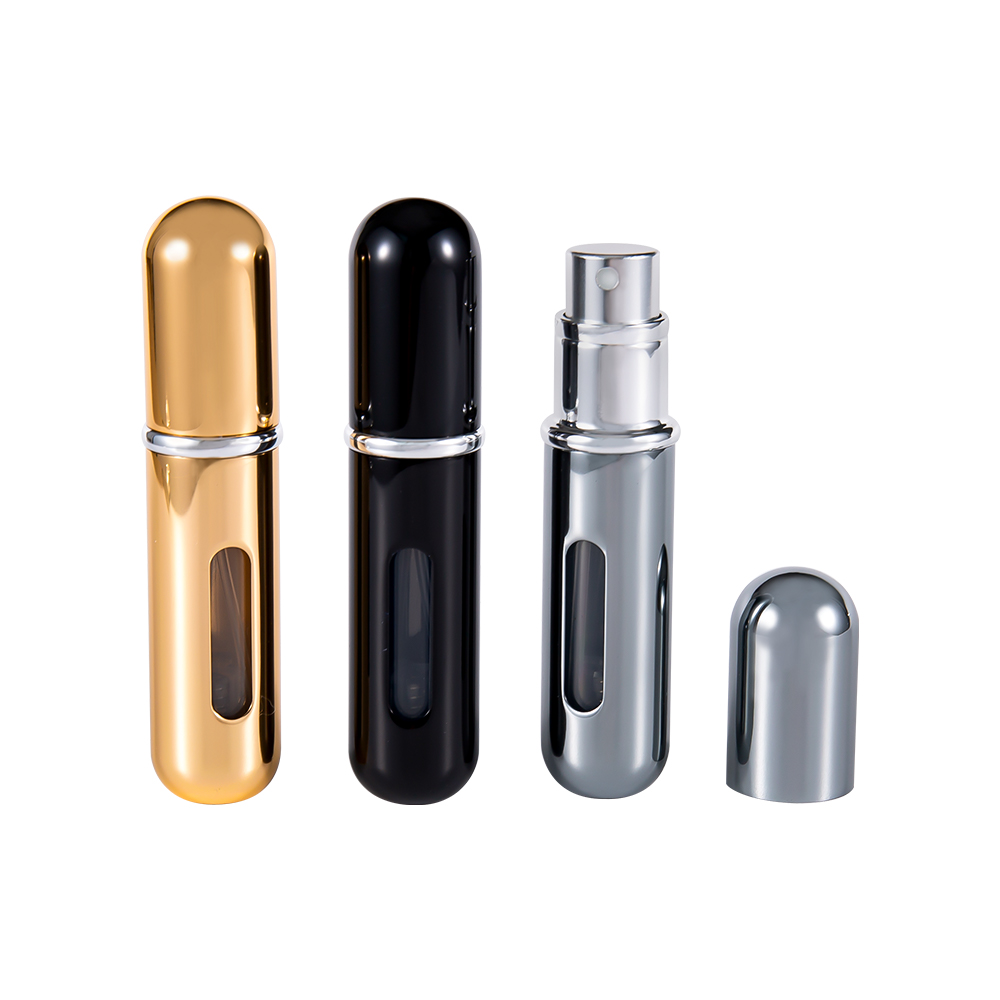 5ML Round Bottom Refill Perfume Bottle Aluminum Customizable Color and LogoThis 5ml round-bottom refill bottle features an aluminum body and a rounded bottom. Customizable colors and logos are available, allowing for personalized customizatio...View Product →
The real trade-off is not sustainability against luxury. It is glass mass against perceived value, and perceived value can be built with wall distribution, base thickness and surface finish rather than raw weight.
Most fragrance brands settle between the two: keep the body at 95 to 105 g, thicken the base to 12 to 15 mm, and put the perceived value into the coating and the cap. A 50 ml gradient-coated set with a K-resin over-cap follows that logic, because the colour work carries the premium signal while the glass stays close to the minimum weight that still passes a 1.2 m drop test.
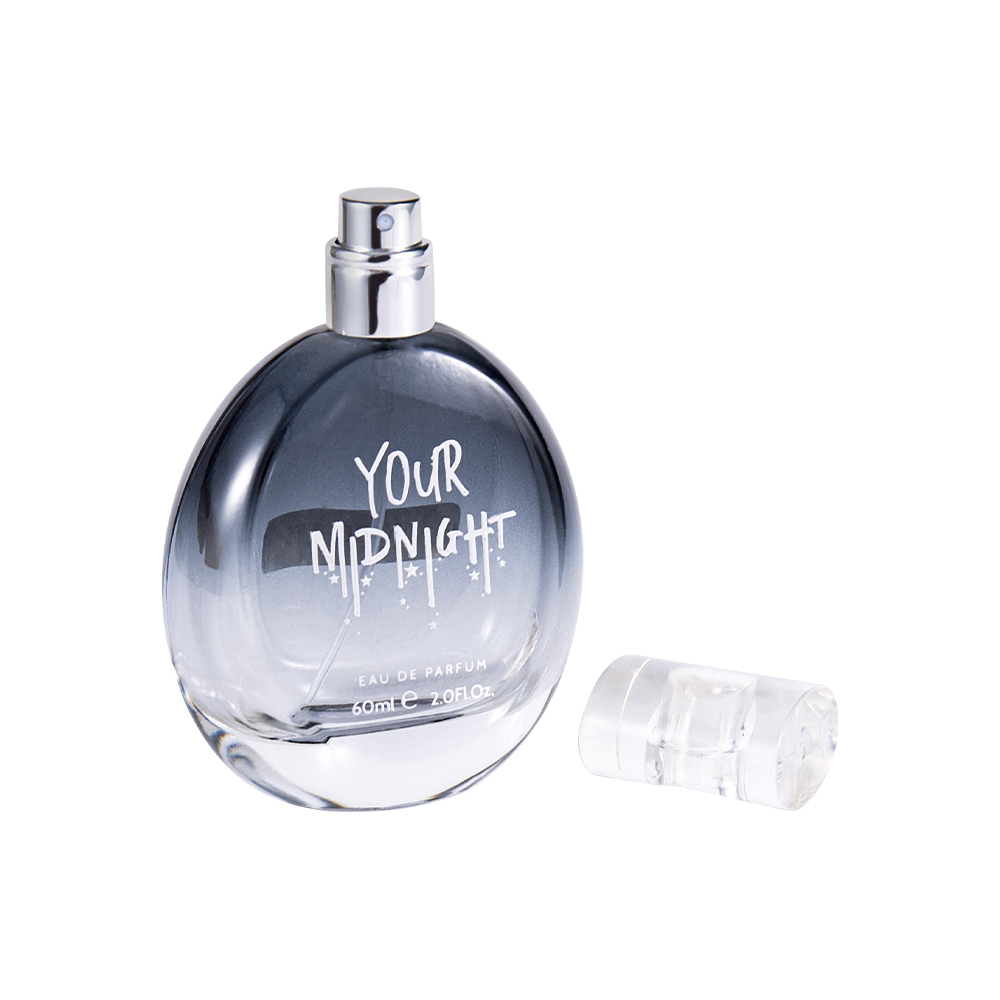 KY106-WJ65 50ML Glass Perfume Set with Gradient Color K Resin CapThe KY106-WJ65 50ml Glass Perfume Set includes a 50ml glass bottle with a gradient color scheme that transitions from light to dark, creating a rich, layered visual ef...View Product →
Four rule sets determine what a compliant glass package looks like through 2030, and only one of them is about the glass body itself. The pressure lands on closures, sleeves and documentation.
| Market | Instrument | What it requires | Effect on glass packaging |
| European Union | Packaging and Packaging Waste Regulation | Applies from August 2026; all packaging recyclable by 1 January 2030, with reuse and recycled content targets for selected formats | Glass bodies already qualify; closures and decoration decide the outcome |
| France, Spain, Germany | Modulated producer responsibility fees | Fees adjust down for recyclable mono-material packaging and up for disruptive formats | Hand-removable PP or aluminium caps reduce the annual fee |
| United Kingdom | Plastic Packaging Tax | Charged per tonne on plastic packaging with less than 30 percent recycled content | Recycled PP caps keep an exemption route open; mixed-resin caps lose it |
| United States | State extended producer responsibility laws | Producers fund collection and must meet recyclability and source reduction targets, many by 2032 | Recyclable glass with separable closures aligns with the targets |
| Retail | Packaging scorecards | Listings increasingly require unit weight and recyclability data per SKU | Documentation becomes as important as design |
A defensible sustainable glass specification is documented rather than asserted. Six data points per SKU cover almost every question a retailer, regulator or auditor will raise.
Because the same logic applies across formats, buyers often standardise on two or three perfume bottle sets across an entire collection. Fewer moulds mean steadier colour control and more predictable cullet sourcing from batch to batch.
Closures deserve the same attention as the body. A 100 ml high-end bottle finished with a bright silver cap, for instance, pairs a recyclable glass body with a separable metal-look closure that does not contaminate the glass stream.
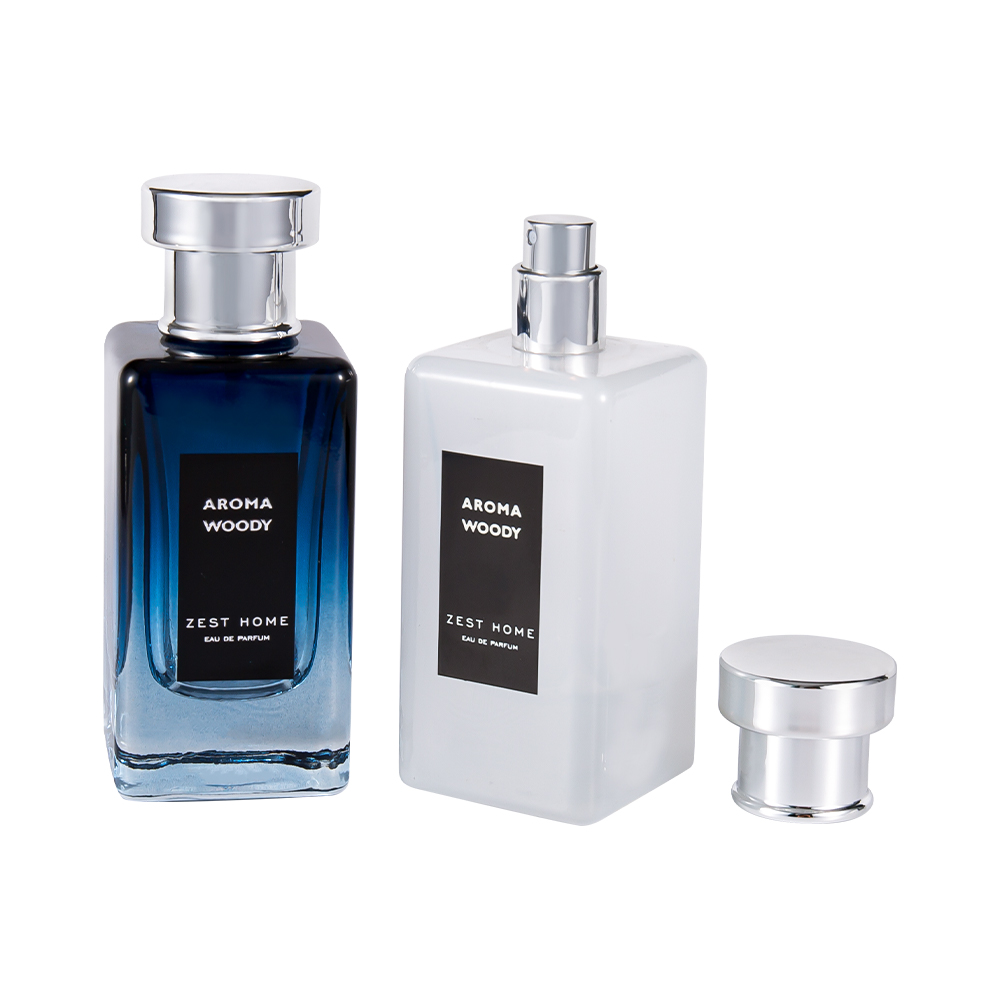 KY1485-WJ1031 100ML High-end Glass Perfume Bottle with Bright Silver CapKY1485-WJ1031 100ML Premium Glass Perfume Bottle, with a capacity of 100ml, is made of high-quality glass with a delicate texture. The bright silver cap creates a shee...View Product →
Per kilogram, yes. Container glass production emits roughly 0.6 to 0.9 kg CO2e per kg, against 2 to 2.9 kg CO2e per kg for virgin PET resin. Per container, no: a 110 g glass bottle carries more embedded carbon than an 18 g PET bottle of the same volume. Glass wins when it is refilled, recycled in a closed loop, or when the plastic alternative is single-use and not collected.
Most cosmetic glass containers can take 30 to 60 percent post-consumer cullet without a visible colour shift, and clear flint glass is the most sensitive grade. Higher shares are technically achievable. Clean cullet availability and colour control, not the melting process, are the usual limits.
No. Fired coatings, UV-cured lacquers and hot stamping sit on the glass as thin surface layers and are burned off or carried into the melt in normal container glass recycling. Full-body plastic sleeves, glued metal plates and mixed-resin caps are the formats that create real separation problems.
Record four values per SKU: unit weight, cullet share of the batch, closure material family and decoration method. Any recyclability claim should name the collection system it depends on, because a package that is recyclable in one market is not automatically recyclable everywhere it ships.
Glass does not become sustainable because of what it is made from. It becomes sustainable because of how it is specified: lower unit weight, higher cullet share, separable closures, decoration that disappears in the melt, and a refill path that keeps the bottle in use for several cycles. Buyers who document those five numbers per SKU answer regulatory and retail questions in minutes instead of weeks, and they usually find unit cost falling at the same time, because mass, freight and material waste all move in the same direction.


+86 151 9036 6355
+86 510 8627 8328

hjglassfactory@vip.163.com

Room 1304, Jiufang Plaza, No. 286, Hongqiao South Road, Jiangyin City, Jiangsu Province, China
Copyright © 2025 HJ Glass Factory
All Rights Reserved.
Wholesale Empty Perfume Bottles, Empty Aromatherapy Bottles