English
 Español
Industry News
Home / News / Industry News / How to Choose a Perfume Bottle Set: 30ml vs 50ml vs 100ml Capacity Guide
Oct 05, 2026
Content
Capacity planning for fragrance packaging
The fill capacity you write on the spec sheet decides glass weight, cap material, carton size, freight cost and the role the SKU plays on shelf. For most fragrance launches the workable default is a 50ml perfume bottle set for the core eau de parfum, a 30ml set for discovery and travel, and a 100ml set for gifting, refill programmes and the lowest cost per millilitre.
That default is not a style preference. It comes from three hard constraints: how many sprays a customer gets from one bottle, how much the empty pack weighs before it is filled, and how much surface area the glass offers for a label or a decoration. Change the capacity and all three move at once, usually in opposite directions.
Pick 50ml for the core retail SKU unless your own channel data says otherwise, use 30ml for discovery, travel retail and subscription formats, and reserve 100ml for gifting, refill programmes and value positioning.
The ranking comes from channel behaviour rather than bottle geometry. A first-time buyer wants a low-risk entry price, a repeat buyer wants the familiar size, and a gift buyer wants visible volume. Spray count is the cleanest way to translate those behaviours into a number.
| Capacity | Approximate sprays | Primary channel | Typical closure approach |
| 30 ml | About 300 | Discovery sets, travel retail, sampling, gift with purchase | Lightweight PP or Surlyn cap, simple crimped sprayer, minimal decoration |
| 50 ml | About 500 | Core retail counter and e-commerce hero SKU | Surlyn, ABS or K-resin cap, crimped pump, budget for coating or printing |
| 100 ml | About 1,000 | Gifting, club and duty-free value tiers, refill programmes | Heavier cap, UV metallising or hot stamping, thicker base glass |
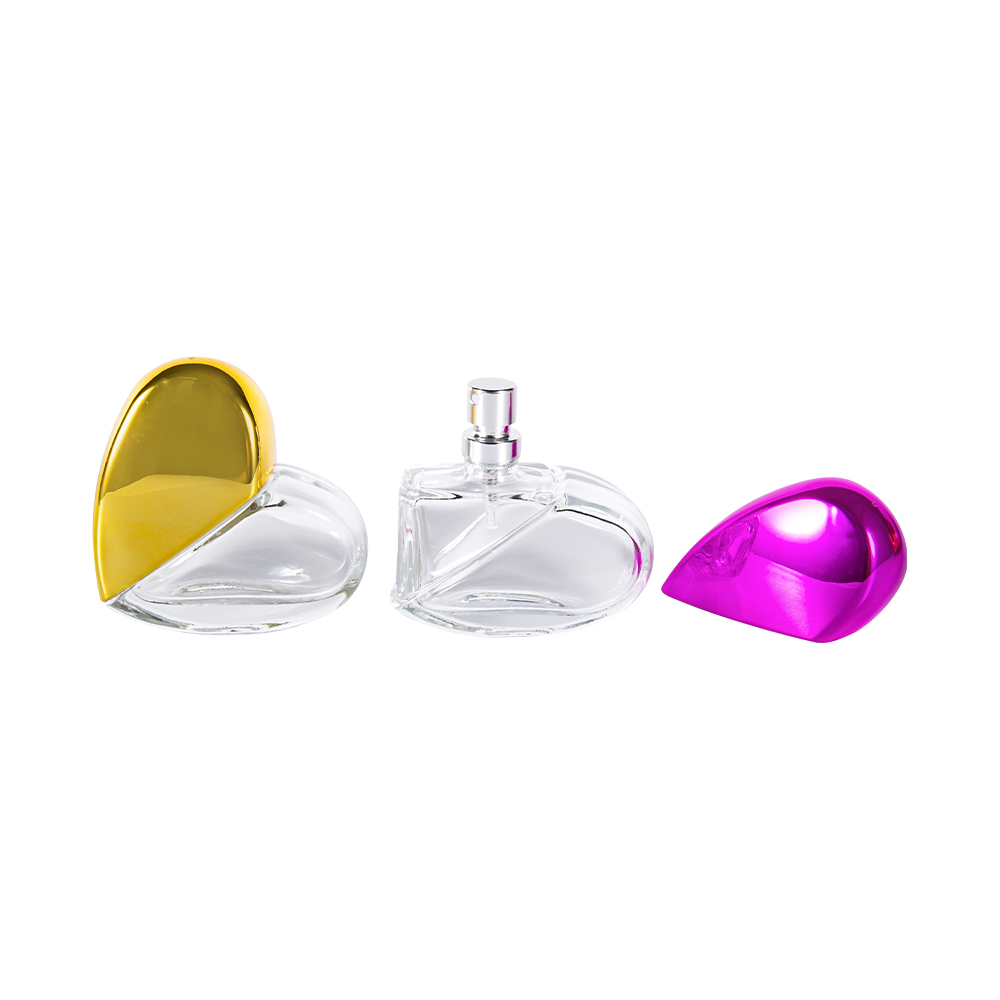
Air travel adds a fourth constraint. The cabin liquids rule used in most jurisdictions caps a single container at 100ml, so a full 100ml bottle sits exactly on the limit with no margin for a generous fill line. Travellers who want breathing room tend to buy 30ml or 50ml instead, which is one reason travel retail ranges lean so heavily on smaller formats. If you are still mapping the line, it helps to browse the full perfume bottle set catalogue for shapes and closure families before capacities are fixed.
A 30ml perfume bottle set is a trial format first and a retail format second, and it should be costed that way.
The economics flip at this size. Glass and juice are the cheap part of the bill; the closure, the carton and the decoration set-up are the expensive part. A 30ml bottle wearing a heavy 100ml-grade cap reads as unstable in the hand and wastes budget on the wrong component.
Sampling programmes and gift-with-purchase formats are where 30ml earns its place: a low absolute price lowers the barrier to a first trial, and the small format travels well in e-commerce parcels. If your range also includes a 15ml or 25ml step below it, keep the same cap family so the collection still reads as one line.
50ml is the safest single capacity in fragrance retail: it balances perceived value, shelf presence and cost per millilitre better than either extreme.
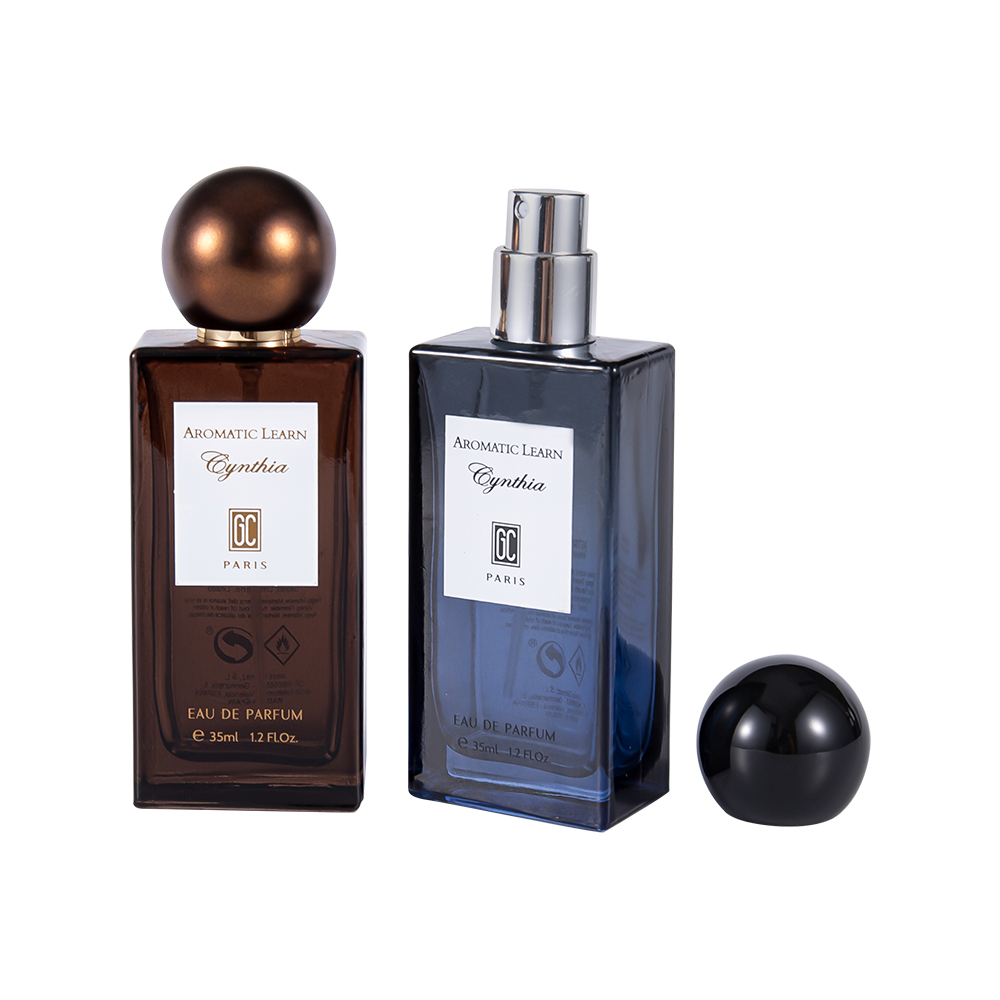
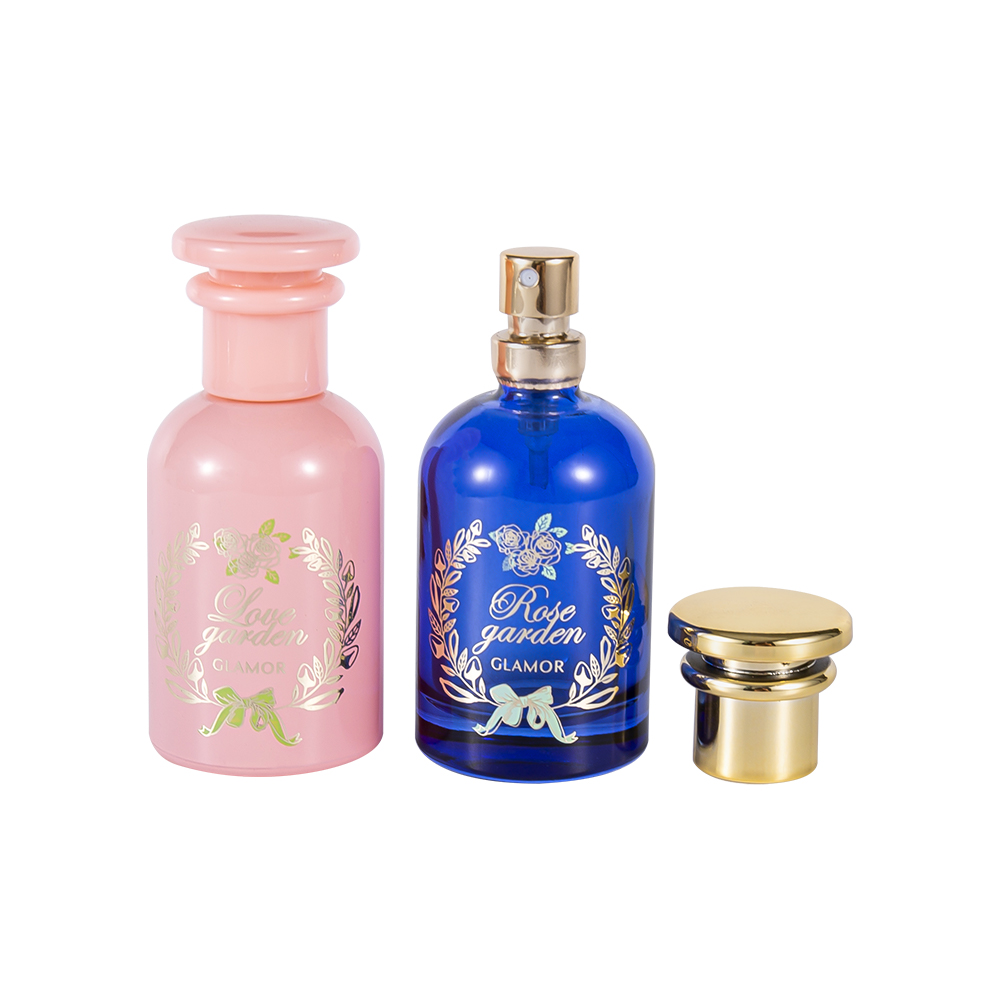
The size sits in the middle of almost every price ladder, and it is forgiving on design. There is enough glass for a readable label, enough weight for the bottle to feel substantial, and enough juice that customers do not feel they are buying a sample. It is also the capacity where a decoration budget stretches furthest, because the surface is large enough to show hot stamping or gradient coating properly.
Most spray fragrance bottles in this range use a 15mm crimp neck, which fixes the pump, the collar and the cap family in one decision. Screw-neck alternatives exist for brands that want refillability, but they change the cap design and the filling line. Confirm the neck finish before artwork is signed off, because a small change in neck diameter invalidates every cap sample already approved.
A 100ml bottle wins on cost per millilitre and gifting appeal, and loses on freight, breakage risk and trial conversion.
The glass itself also becomes a design constraint. A tall 100ml bottle needs a thicker base and a wider footprint for stability, and the shoulder geometry shifts enough that it no longer reads as a scaled-up 50ml. Brands that want a family look usually redesign the shoulder deliberately rather than stretch the drawing, keeping the cap and collar identical across capacities.
Glass weight grows faster than fill volume, and cap material becomes the largest single variable in perceived quality once a bottle passes 50ml.
Tripling the fill does not triple the empty weight, but it does add roughly 60 to 100 percent in typical moulds, because wall thickness and base thickness cannot be reduced proportionally without weakening the bottle.
Bar length is scaled to the 240 g upper bound of the 100ml range. Ranges reflect typical wholesale glass perfume bottle sets, so confirm actual weight against your own mould drawing.
Once the bottle is set, the cap decides how the pack feels in the hand, how much it weighs in transit, and how much of the unit cost sits above the neck line. For a fuller breakdown of glass types and closure systems, the guide to perfume bottle set types and materials is worth reading before a supplier brief is written.
| Cap material | Feel and finish | Best fit |
| ABS | Rigid, takes electroplating and UV metallising well | Premium screw caps and heavy gift-tier closures |
| PP | Light, chemically resistant, low cost | High-volume 30ml sizes, travel formats, refill caps |
| Surlyn | Soft touch, slightly translucent, high perceived value | 50ml core SKUs and 100ml gift sets |
| K-resin | High clarity with a glass-like sparkle | Decorative caps where see-through clarity is the point |
| PCTA | Dense and heavy in the hand | 100ml bottles where cap weight signals value |
| Acrylic | Optical clarity, deep colour, substantial weight | Luxury 50ml and 100ml closures |
HJ Glass Factory, the manufacturer behind this site, runs mould development, cap tooling and finishing in house and states a daily output of 1.4 million glass bottles and 1 million caps across ABS, PP, Surlyn, K-resin, PCTA, PE and acrylic closures. For a three-capacity range that matters, because the same cap family can be produced in different materials and finishes without splitting the order across suppliers between the 30ml and the 100ml.
Work through these steps in order and the capacity question resolves itself before tooling money is committed.
In most retail fragrance ranges, 50ml is the volume leader because it sits mid-ladder on price and gives customers enough product to judge a scent properly. The exception is travel retail and sampling, where 30ml outsells it, and gifting, where 100ml takes the largest share in the last quarter of the year.
Yes, and most houses scale one design across all three. The cap, collar and shoulder proportions stay constant while wall thickness, base depth and footprint are rebalanced, because a stretched 100ml bottle needs a thicker base to remain stable on a counter. Expect the 100ml empty weight to be roughly double the 30ml weight, not triple.
A 100ml bottle sits exactly at the 100ml container limit used for cabin liquids in most jurisdictions, so it leaves no margin for a full fill line. Many travellers choose 30ml or 50ml instead, and rules differ between countries, so the practical answer is to check the destination rules before building a travel range around 100ml.
Confirm five things: the neck finish and pump compatibility, the empty bottle weight, whether the cap is crimped or screw-on, which decoration methods work on that surface area, and that samples are approved in the final capacity rather than in a larger size.


+86 151 9036 6355
+86 510 8627 8328

hjglassfactory@vip.163.com

Room 1304, Jiufang Plaza, No. 286, Hongqiao South Road, Jiangyin City, Jiangsu Province, China
Copyright © 2025 HJ Glass Factory
All Rights Reserved.
Wholesale Empty Perfume Bottles, Empty Aromatherapy Bottles