

 English
 Español
Industry News
What Makes a Good Reed Diffuser Glass Bottle?
Apr 23, 2026
Content
Reed diffuser glass bottles are the primary packaging component in ambient fragrance products. They hold the fragrance oil, control evaporation rate through neck geometry, and present the product visually on retail shelves or in hospitality environments. For manufacturers, importers, and private label buyers, selecting the right bottle requires understanding glass composition, dimensional tolerances, closure compatibility, and decoration options.
Glass Types Used in Diffuser Bottle Manufacturing
The glass type affects wall thickness, clarity, chemical resistance, and cost. Most diffuser bottles on the wholesale market use one of two glass compositions: soda-lime glass or borosilicate glass.
Soda-Lime Glass
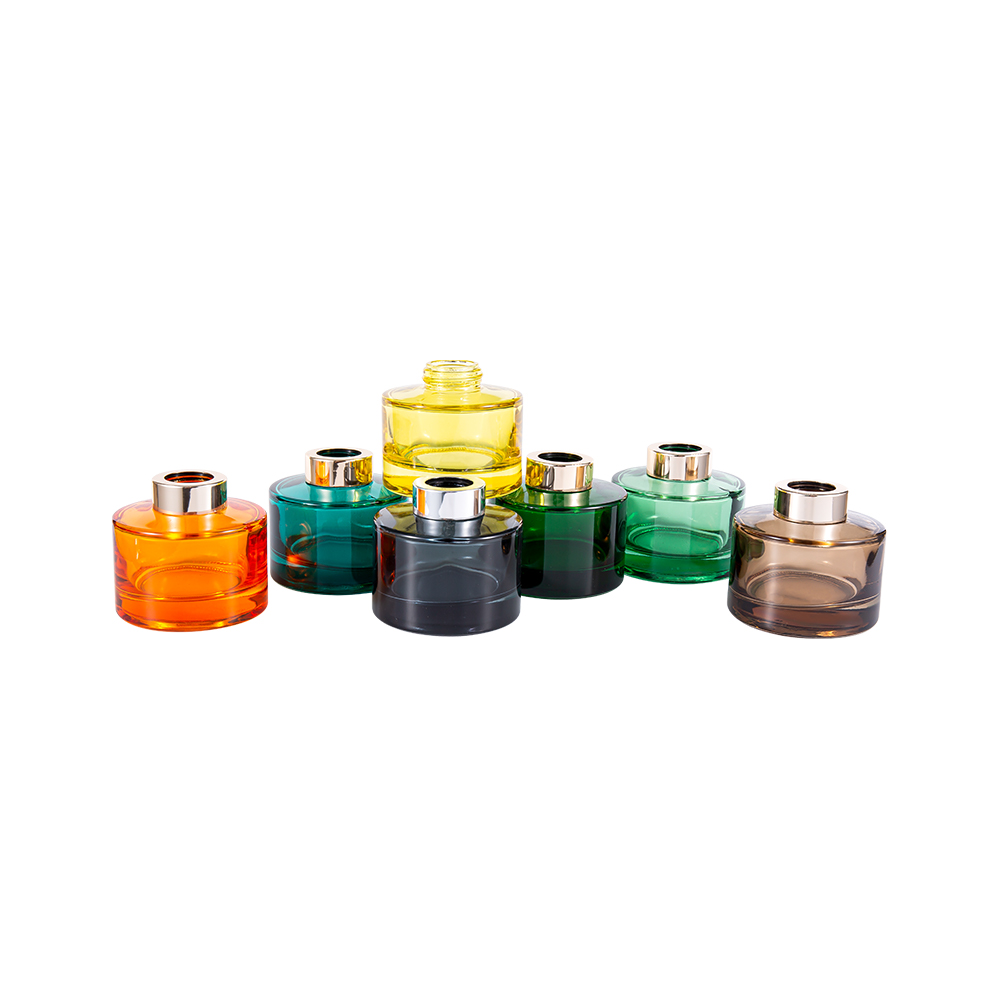
Soda-lime glass is the most common material used in bulk reed diffuser bottles for home fragrance production. It is made from silica, sodium oxide, and calcium oxide. It offers good optical clarity and is compatible with standard fragrance oil formulations.
- Silica content: approximately 70–75% by weight
- Density: 2.4–2.5 g/cm³
- Thermal expansion coefficient: 8.5–9.5 x 10⁻⁶/°C
- Chemical resistance: adequate for alcohol-based and oil-based fragrance carriers
- Cost: lower than borosilicate, suitable for high-volume wholesale orders
Borosilicate Glass
Borosilicate glass contains boron trioxide, which reduces the thermal expansion coefficient significantly. It is more chemically resistant than soda-lime glass and is used in premium diffuser lines where aggressive solvent carriers are involved.
- Boron trioxide content: 12–15% by weight
- Thermal expansion coefficient: 3.3 x 10⁻⁶/°C
- Higher resistance to isopropyl alcohol and dipropylene glycol carriers
- Greater clarity and lower iron content produce a cleaner, more neutral appearance
- Cost: 20–40% higher than equivalent soda-lime bottles
Glass Type Comparison
The two glass types serve different market segments. The table below compares their key properties for wholesale procurement decisions.
| Property | Soda-Lime Glass | Borosilicate Glass |
|---|---|---|
| Main composition | SiO2, Na2O, CaO | SiO2, B2O3, Al2O3 |
| Thermal expansion | 8.5–9.5 x 10⁻⁶/°C | 3.3 x 10⁻⁶/°C |
| Chemical resistance | Moderate | High |
| Optical clarity | Good | Excellent |
| Unit cost | Lower | Higher |
| Best use case | Standard retail diffusers | Premium and solvent-heavy formulas |
Bottle Geometry and Capacity
Neck Diameter and Reed Performance
Neck diameter is one of the most critical dimensions in reed diffuser glass bottle sizes and capacity selection. The neck controls how many reeds fit inside the bottle and how quickly the fragrance oil travels up the reed by capillary action. A neck that is too wide accelerates evaporation and shortens product life. A neck that is too narrow restricts oil flow and reduces scent throw.
- Recommended neck inner diameter: 18 mm to 28 mm for standard reed bundles
- Narrow neck (18–20 mm): suits 4–6 reeds, slower evaporation, longer product life
- Wide neck (24–28 mm): suits 8–12 reeds, stronger initial scent throw
- Reed diameter compatibility: standard fiber reeds are 3 mm; rattan reeds are 2.5–4 mm
- Neck height should be at least 20 mm to prevent reeds from falling inward
Standard Sizes and Fill Volumes
Wholesale buyers typically source bottles in standardized fill volumes that correspond to retail product formats. The table below lists the most common sizes used in the home fragrance industry.
| Fill Volume | Total Bottle Capacity | Typical Height | Neck Diameter | Recommended Use |
|---|---|---|---|---|
| 50 ml | 60–70 ml | 100–120 mm | 18–20 mm | Travel size, gift sets |
| 100 ml | 110–120 ml | 130–160 mm | 20–22 mm | Standard retail unit |
| 200 ml | 220–240 ml | 170–200 mm | 22–25 mm | Home use, mid-range retail |
| 500 ml | 520–550 ml | 220–260 mm | 25–28 mm | Hotel lobby, commercial space |
Closure and Stopper Options
Cork Stoppers
Reed diffuser glass bottles with cork stoppers are popular in the natural and artisan fragrance segment. Cork provides a neutral seal during shipping and storage. It prevents oil evaporation before the product is activated by the consumer. Natural cork is graded by density and compression recovery. For diffuser bottles, a minimum Grade 2 cork with a diameter tolerance of ±0.3 mm is recommended to ensure a consistent fit across production batches.
- Natural cork: biodegradable, traditional aesthetic, variable compression
- Synthetic cork: consistent density, no taint risk, suitable for high-volume runs
- Cork diameter should match the neck inner diameter with a 0.5–1 mm interference fit
Aluminum and Plastic Caps
Screw caps and press-fit caps in aluminum or HDPE are used in more contemporary diffuser packaging. Aluminum caps offer a premium look and are compatible with UV printing and hot stamping. HDPE caps are lower cost and suitable for mass-market lines. Both cap types must be chemically compatible with the fragrance carrier used in the formulation.
Surface Treatments and Decoration
Frosting, Coating, and Printing
Surface decoration affects both the visual presentation and the structural properties of the bottle. Buyers sourcing custom reed diffuser glass bottles for packaging should specify decoration methods clearly in their purchase orders.
- Acid frosting: permanent matte surface, uniform finish, no peeling risk
- Spray coating: wide color range, requires a scratch-resistant topcoat for durability
- Screen printing: precise logo and text application, up to 4 spot colors
- Hot stamping: metallic foil finish, suitable for luxury positioning
- Sleeve labeling: full-wrap print coverage, easy to change between SKUs
Wholesale Sourcing and Custom Packaging
MOQ and Lead Time
For reed diffuser glass bottles wholesale, minimum order quantities vary by bottle complexity and decoration requirements. Standard stock bottles typically have lower MOQs than fully custom molds.
- Stock bottle MOQ: 500–2,000 units per SKU
- Custom mold MOQ: 5,000–10,000 units, with mold tooling cost of USD 1,500–5,000
- Decoration MOQ: screen printing requires a minimum of 1,000 units per color setup
- Standard lead time: 25–35 days for stock bottles with decoration
- Custom mold lead time: 45–60 days, including sample approval
Quality Inspection Checklist
Buyers should verify the following parameters on pre-shipment inspection reports before releasing payment for large orders.
- Wall thickness uniformity: tolerance within ±0.3 mm across the body
- Neck inner diameter: verify with go/no-go gauge against specification
- Verticality: the bottle should stand within 1° of vertical on a flat surface
- Seam visibility: glass seams should not be visible on the front face
- Decoration registration: print alignment within ±0.5 mm of the approved position
- Chemical compatibility test: soak cork or cap in carrier solvent for 48 hours and check for swelling or discoloration
FAQ
What is the best glass type for reed diffuser bottles?
Soda-lime glass is suitable for most standard fragrance formulations and is the most cost-effective option for reed diffuser glass bottles wholesale sourcing. Borosilicate glass is recommended when the fragrance carrier contains high concentrations of isopropyl alcohol or other aggressive solvents, or when optical clarity is a priority for premium positioning.
What neck diameter should I specify for reed diffuser bottles?
The optimal neck inner diameter for reed diffuser glass bottle sizes and capacity depends on the number of reeds and the desired evaporation rate. For standard retail products using 6–8 reeds, a neck inner diameter of 20–22 mm provides a good balance between scent throw and product longevity. Wider necks above 25 mm are better suited for large-format commercial diffusers.
Can reed diffuser glass bottles be fully customized for a private label?
Yes. Custom reed diffuser glass bottles for packaging can be produced with unique shapes, colors, surface treatments, and closure types. Custom mold production requires a tooling investment and a minimum order of 5,000 units in most factories. For smaller private label runs, buyers can select from existing stock molds and apply custom decoration through screen printing, spray coating, or labeling at lower MOQs.
References
- Shelby, J. E. (2005). Introduction to Glass Science and Technology (2nd ed.). Royal Society of Chemistry.
- ISO 9058:2008. Tubing for Laboratory Use – Borosilicate Glass Tubing. International Organization for Standardization.
- ASTM C147-86. (2015). Standard Test Methods for Internal Pressure Strength of Glass Containers. ASTM International.
- European Container Glass Federation (FEVE). (2022). Glass Packaging: Sustainability and Performance Data Report. FEVE Publications.
- Pilkington, L. A. B. (1969). The float glass process. Proceedings of the Royal Society of London. Series A, 314(1516), 1–25.
NEW PRODUCTS
Let's Discuss Your Specific Packaging Needs And Explore The
Possibilities
further

Contact us
-

+86 151 9036 6355
+86 510 8627 8328
-

hjglassfactory@vip.163.com
-

Room 1304, Jiufang Plaza, No. 286, Hongqiao South Road, Jiangyin City, Jiangsu Province, China
Copyright © 2025 HJ Glass Factory
All Rights Reserved.
Wholesale Empty Perfume Bottles, Empty Aromatherapy Bottles

