English
 Español
Industry News
Home / News / Industry News / What Are the Different Types of Caps and Sprayers for a 30ml Glass Perfume Bottle?
Jan 08, 2026
Content
In the world of fragrance, the 30ml glass perfume bottle is a standard canvas for brand expression. However, the true determinants of product integrity, user experience, and brand perception are the often-overlooked engineering components: the cap and the sprayer. For brand owners, procurement specialists, and product developers, selecting the right closure system is a technical decision with direct implications for shelf life, customer satisfaction, and production efficiency. This guide provides a detailed, engineering-level analysis of the caps and sprayers available for a 30ml glass perfume bottle, moving beyond aesthetics to examine material science, mechanical function, and strategic integration.
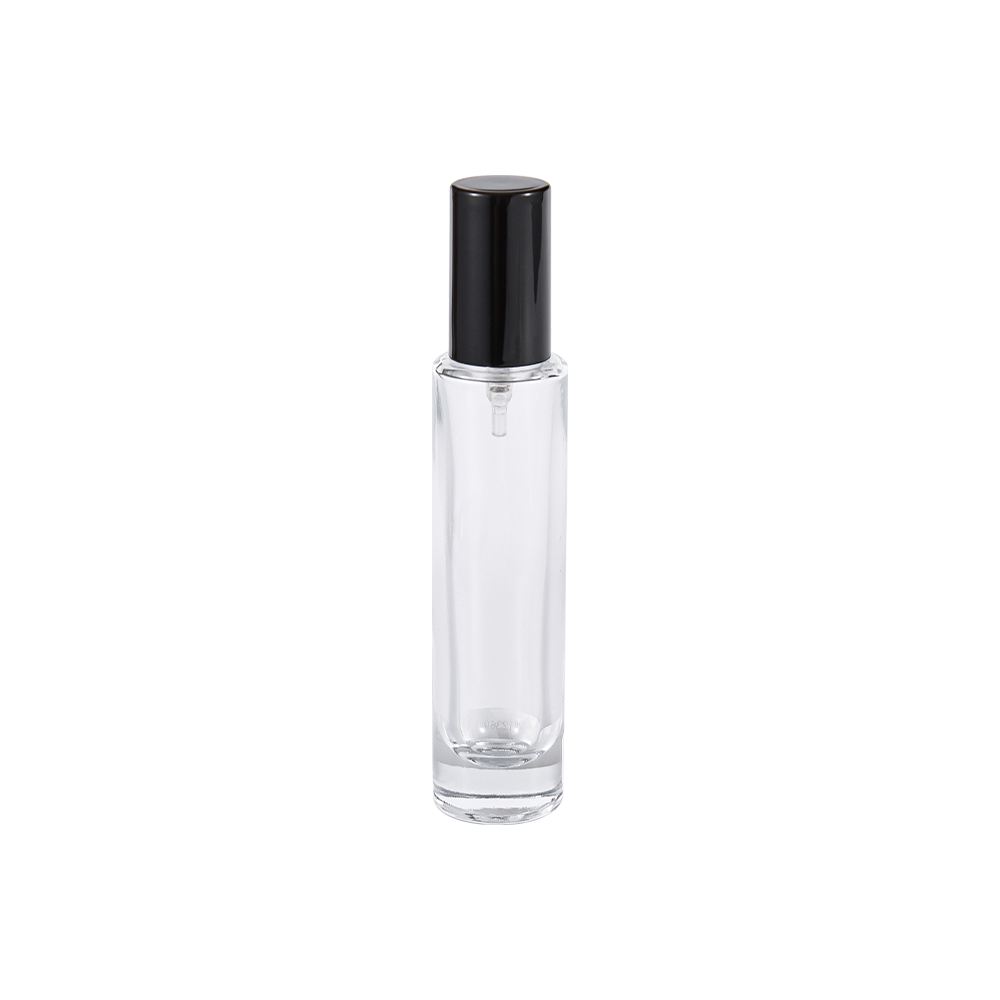
The primary function of a cap is to provide a reliable, long-term seal to prevent evaporation, oxidation, and contamination. The choice of sealing mechanism dictates performance, user interaction, and compatibility with filling lines.
Snap-on caps utilize a precision-molded inner skirt that flexes over a glass bottle's finish (the lip and neck), creating an audible "snap" and a friction-based seal. This mechanism offers excellent compatibility with high-speed automated filling lines due to its simple application. However, the sealing force is inherently limited by the plastic's flexural modulus and can degrade after repeated cycles, making it less ideal for highly volatile concentrates. This cap is a cornerstone of cost-effective, empty 30ml glass perfume bottles bulk wholesale offerings, where production speed and unit cost are paramount.
Threaded caps create a seal through axial force generated as the cap is twisted onto matching threads on the bottle neck. This design allows for significantly higher and more consistent sealing pressure compared to snap-on caps. The multi-turn engagement provides a robust barrier against vapor transmission, making it the technical choice for premium perfumes, essential oils, and products requiring extended shelf life. The act of screwing and unscrewing also conveys a sense of quality and permanence, aligning with the expectations of a luxury 30ml glass perfume bottle for brand packaging.
Magnetic caps use an encapsulated ferromagnetic plate or ring in the cap and a magnet in the bottle's collar (or vice-versa) to create a seamless closure. The user experience is defined by a smooth, silent, and satisfying attraction, offering a modern and high-touch interaction. From an engineering standpoint, the challenge lies in balancing magnetic strength—strong enough for a secure hold, but weak enough for easy removal—and ensuring perfect axial alignment to prevent a wobbly fit. This system is a hallmark of ultra-premium packaging but requires tighter manufacturing tolerances.
Choosing the right cap requires weighing functional priorities against cost and brand positioning. The following table provides a data-driven comparison:
| Cap Type | Sealing Mechanism & Reliability | User Interaction & Perception | Filling Line Compatibility | Relative Cost Index | Ideal Application |
|---|---|---|---|---|---|
| Snap-On Cap | Friction-based. Good initial seal, potential for creep relaxation over time/vibration. | Quick, one-handed use. Perceived as convenient but standard. | Excellent. High-speed application with minimal complexity. | 1.0 (Base) | High-volume commercial fragrances, promotional items, bulk wholesale projects. |
| Threaded Screw Cap | Axial force-based. Excellent long-term seal, superior barrier against evaporation. | Deliberate, two-handed action. Conveys substance, quality, and security. | Good. Requires torque control for consistent sealing; slower than snap-on. | 1.5 - 2.5 | Premium & niche fragrances, oils, products requiring maximum shelf life. |
| Magnetic Cap | Magnetic force-based. Good seal, dependent on precision of mating surfaces. | Exceptional. Smooth, elegant, and delivers a "wow" factor. | Moderate. May require specific orientation or placement equipment. | 3.0 - 5.0+ | Ultra-luxury and designer brands, limited editions where experience is key. |
The sprayer, or atomizer, is a micro-pump that defines the fragrance application experience. Its internal engineering controls dose, spray pattern, and mist quality.
A standard spray pump operates via a spring-assisted piston. Depressing the actuator creates pressure, forcing liquid up the dip tube, through a chamber, and out a nozzle, breaking it into a mist. Key performance metrics are actuation force (typically 25-35 Newtons), delivery volume per spray (usually 75-100 µL for a 30ml glass perfume bottle), and spray pattern (hollow cone or solid stream). It is the reliable, cost-effective choice for most 30ml glass perfume bottle with atomizer sprayer configurations.
Fine mist atomizers represent a technological step-up. They incorporate a more complex nozzle design, often with a laser-drilled orifice and internal baffling or swirling chambers. This creates smaller, more uniform droplet sizes (often below 50 microns). The result is a softer, drier, and more even distribution on the skin, which enhances the perception of the fragrance's top notes and reduces the cold, wet feel of alcohol. This is a critical, albeit often invisible, upgrade for a true luxury 30ml glass perfume bottle for brand packaging.
For non-aerosol applications, rollerballs and droppers offer precise, localized application. A rollerball system uses a free-spinning ball, typically made of steel or ceramic, seated in a housing. The challenge is perfect sphericity and sealing to prevent leakage and drying. Glass droppers provide ultimate user control and are central to the refillable 30ml glass perfume bottle with travel case concept, allowing easy transfer from a larger vessel. Their seal depends entirely on the friction fit of the glass pipette and the inner seal of the bulb or cap.
| Dispensing System | Mechanism & Mist/Drop Characteristics | Dose Control & User Experience | Primary Seal Integrity | Best Suited For |
|---|---|---|---|---|
| Standard Spray Pump | Mechanical piston pump. Droplet size ~80-150 microns. | Consistent, full-coverage spray. Familiar and functional. | Very Good. Internal valve seals pump inlet at rest. | Wide consumer appeal, daily wear fragrances (EDT/EDP). |
| Fine Mist Atomizer | Advanced nozzle engineering. Droplet size ~30-80 microns. | Feather-light, even mist. Perceived as higher quality and less wasteful. | Very Good. Similar internal sealing to standard pumps. | Premium and luxury fragrances, where application sensory is critical. |
| Rollerball Applicator | Capillary action via rotating ball. Delivers liquid, not a mist. | Highly precise, targeted application. Zero evaporation during use. | Good. Dependent on ball-to-housing tolerance and lubricating fluid. | Perfume oils, pulse point concentrates, solid/semi-solid fragrances. |
| Glass Dropper | Manual suction and release. Single drops to small streams. | Complete user control, ritualistic. Ideal for blending or dilution. | Moderate. Relies on pipette fit and rubber bulb integrity. | Small batch, artisanal, refillable, or high-potency fragrance oils. |
The most critical technical specification is the finish or bore of the bottle neck—its outer diameter and thread/snap specification (e.g., 18/415, 20/410). The cap and sprayer must be precisely matched to this finish. A mismatch of even 0.1mm can cause leakage or improper seating. For brands exploring a custom 30ml glass perfume bottle private label project, working with a manufacturer who controls both glass molding and closure sourcing is essential to guarantee this compatibility and avoid costly production delays.
The industry is undergoing a significant shift toward sustainable materials. According to the latest report by The Fragrance Foundation, there is a 40% year-over-year increase in brand inquiries for post-consumer recycled (PCR) materials and bioplastics in packaging components, including sprayers and caps. Engineering challenges include maintaining the mechanical strength, chemical resistance (to volatile aromatic compounds), and clarity required for luxury components. Advanced PCR acrylics for caps and partially bio-based polymers for pump housings are now entering the supply chain, driven by both regulation and consumer demand for refillable 30ml glass perfume bottle systems and reduced virgin plastic use.
Source: The Fragrance Foundation - 2024 Sustainability & Insights Report - https://www.fragrancefoundation.org/insights/
For B2B buyers, the choice of supplier is as important as the choice of component. A manufacturer with deep technical expertise does not just sell parts; they provide integrated solutions. This involves:
A company built on a foundation of precision manufacturing, such as one with decades of experience in producing high-specification components under strict quality control, is positioned to be this kind of partner. Their dedicated technical team can translate a brand's vision for a luxury 30ml glass perfume bottle for brand packaging into a reliable, producible technical specification, ensuring quality from prototype to bulk wholesale production run.
Selecting caps and sprayers for a 30ml glass perfume bottle is a multi-disciplinary exercise in mechanical engineering, material science, and human factors design. The optimal choice balances the uncompromising need for a hermetic seal with the desired brand expression and user ritual. By understanding the technical nuances between snap-on, threaded, and magnetic seals, or between standard pumps and fine mist atomizers, brands and procurement professionals can make informed, strategic decisions. Ultimately, these components are not mere accessories; they are the critical interface between a precious fragrance and the consumer, engineered to protect, deliver, and delight.
The single most important factor is the quality and type of the primary seal between the cap and the bottle neck. For long-term storage of high-value or volatile concentrates, a threaded screw cap provides superior, consistent axial force and is objectively more reliable than friction-based snap-on caps. The spray pump's internal seal is secondary and protects mainly during the period between uses.
No, this is not recommended without validation. Alcohol-based perfumes and oil-based fragrances have vastly different viscosities and surface tensions. A standard spray pump engineered for ethanol may not generate sufficient pressure to properly atomize a thicker oil, leading to a stream or drips. It may also use seals (like gaskets) that are not chemically compatible with certain oils, leading to degradation and leakage. Always specify the fluid type to your supplier.
Modern magnetic caps, when well-engineered, provide sufficient hold for normal travel. However, they are theoretically more susceptible to being dislodged by a direct, lateral impact compared to a threaded cap. For a dedicated refillable 30ml glass perfume bottle with travel case, a threaded cap or a magnetic cap used in conjunction with a protective travel sleeve that prevents direct pressure on the cap is the more prudent engineering choice to guarantee no leaks in a bag.
When inquiring about a custom 30ml glass perfume bottle private label project, key technical questions include: "What is the exact bottle finish specification (e.g., 18/415)?" "Can you provide test data for the seal integrity (e.g., leak test results under pressure/vacuum) of the recommended cap?" "What is the coefficient of variation (CV%) for the spray pump's delivery volume across a production batch?" and "Do you conduct compatibility testing with my specific fragrance formulation?"
Absolutely, from an engineering and brand equity perspective. The fine mist atomizer enhances the product in two key ways: 1) Sensorially: It delivers a drier, more even application that improves fragrance diffusion and eliminates the cold, wet feel of alcohol, directly elevating the perceived quality. 2) Economically: It often results in less overspray and more efficient fragrance deposition, which can lead to longer perceived product life per bottle. For a true luxury 30ml glass perfume bottle for brand packaging, it is a critical component that justifies its cost through enhanced user experience and brand perception.


+86 151 9036 6355
+86 510 8627 8328

hjglassfactory@vip.163.com

Room 1304, Jiufang Plaza, No. 286, Hongqiao South Road, Jiangyin City, Jiangsu Province, China
Copyright © 2025 HJ Glass Factory
All Rights Reserved.
Wholesale Empty Perfume Bottles, Empty Aromatherapy Bottles