English
 Español

Industry News
Home / News / Industry News / Custom Bottle Design: Why Luxury Perfume Brands Invest in Proprietary Glass Flacons
Nov 23, 2026
Content
The most expensive decision in a fragrance launch is made long before the first unit ships: the mold. Tooling a proprietary 100ml flacon locks a brand into a development budget, an eight to fourteen week lead time, and a decoration specification that has to be approved before production glass even exists. Brands sign off anyway, because the bottle is the only element of a fragrance a customer can evaluate before the first spray.
At HJ Glass Factory, mold development, closure matching, and in-house decorating sit inside the same production chain, which is what makes a proprietary bottle realistic for a mid-sized perfume house rather than only for a global group. This guide covers why luxury brands invest in custom bottle design, what the investment actually costs, and where the money comes back.
A proprietary flacon pays for itself through price support and repeat purchase, not through a lower glass price. Stock bottles win on unit cost; custom bottles win on revenue per sale.
Custom bottle design is the specification of a proprietary glass container, covering mold geometry, glass weight and wall thickness, neck finish, closure interface, and surface decoration, produced for one brand and unavailable to its competitors.
Four levers carry the investment:
Tooling is a one-time cost; glass, decoration, and closures are per-unit costs. Programs go wrong when a brand negotiates the one-time number hard and ignores the three recurring ones, because a two-cent difference per unit becomes a five-figure difference per order.
| Cost element | Cost type | Typical share of first order |
| Mold and tooling | One-time | 5 to 12 percent |
| Glass body, forming to QC | Per unit | 30 to 45 percent |
| Surface decoration | Per unit | 15 to 25 percent |
| Closure, pump and collar | Per unit | 12 to 20 percent |
| Sampling, packing and freight | Mixed | 8 to 15 percent |
Two rules follow. Negotiate tooling and volume in the same conversation, because committing to a 25,000-unit run in exchange for part of the mold cost is usually cheaper than paying full tooling on a 5,000-unit trial. And keep decoration off the first run where possible, so the mold and the glass body are proven before a coating recipe is committed to production.
Surface decoration is the highest-return line in a bottle budget, because it is the only cost the customer can see, touch, and photograph. Glass forming gets a bottle listed; decoration gets it picked up.
Coatings do more than decorate. UV-protective coatings on empty perfume bottles slow the oxidation that flattens a fragrance between the first spray and the last third of the fill, which makes preservation a real reason to specify a coating rather than a justification added afterwards.
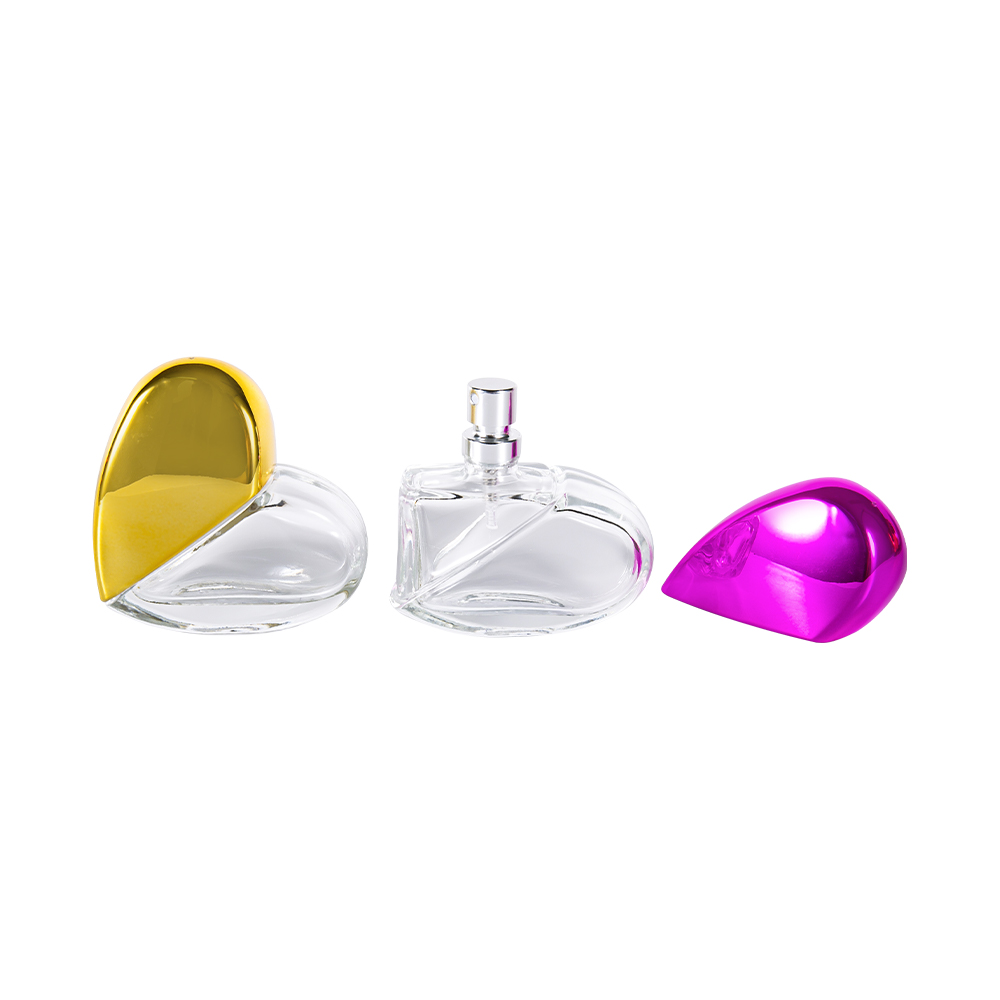
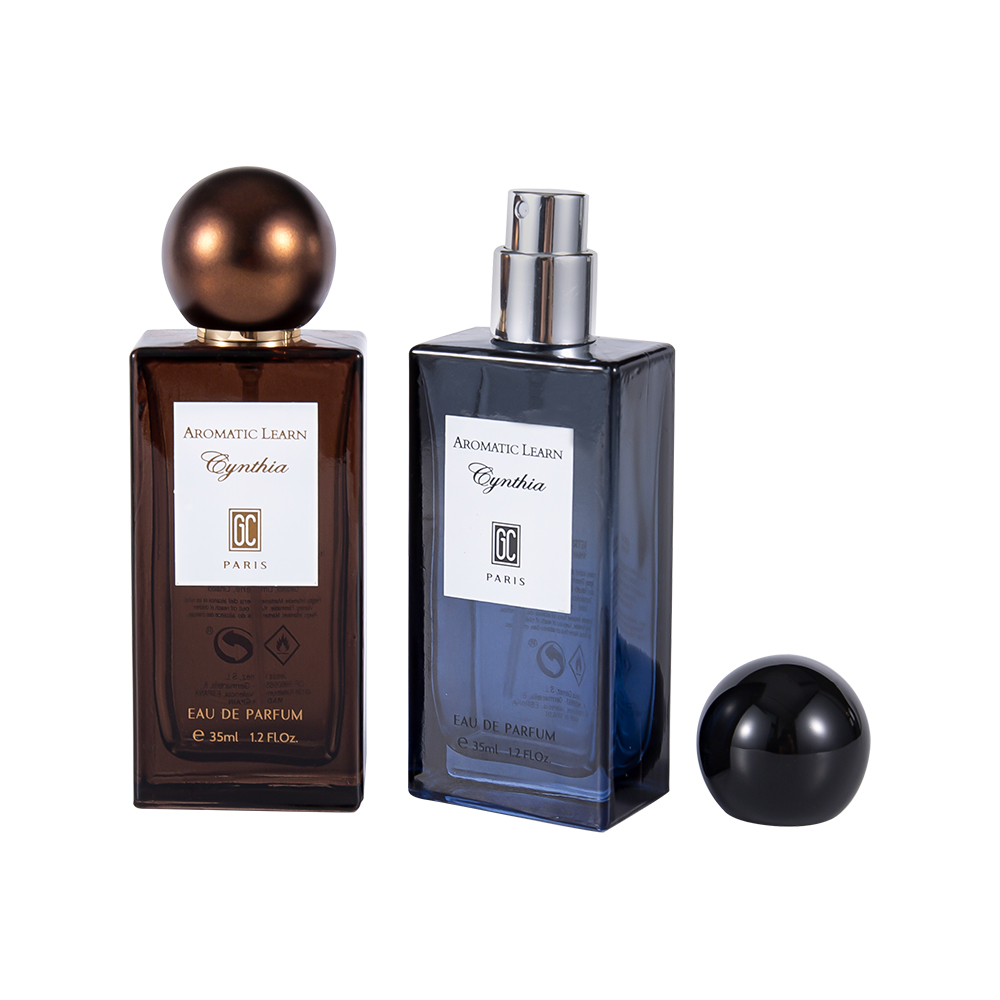
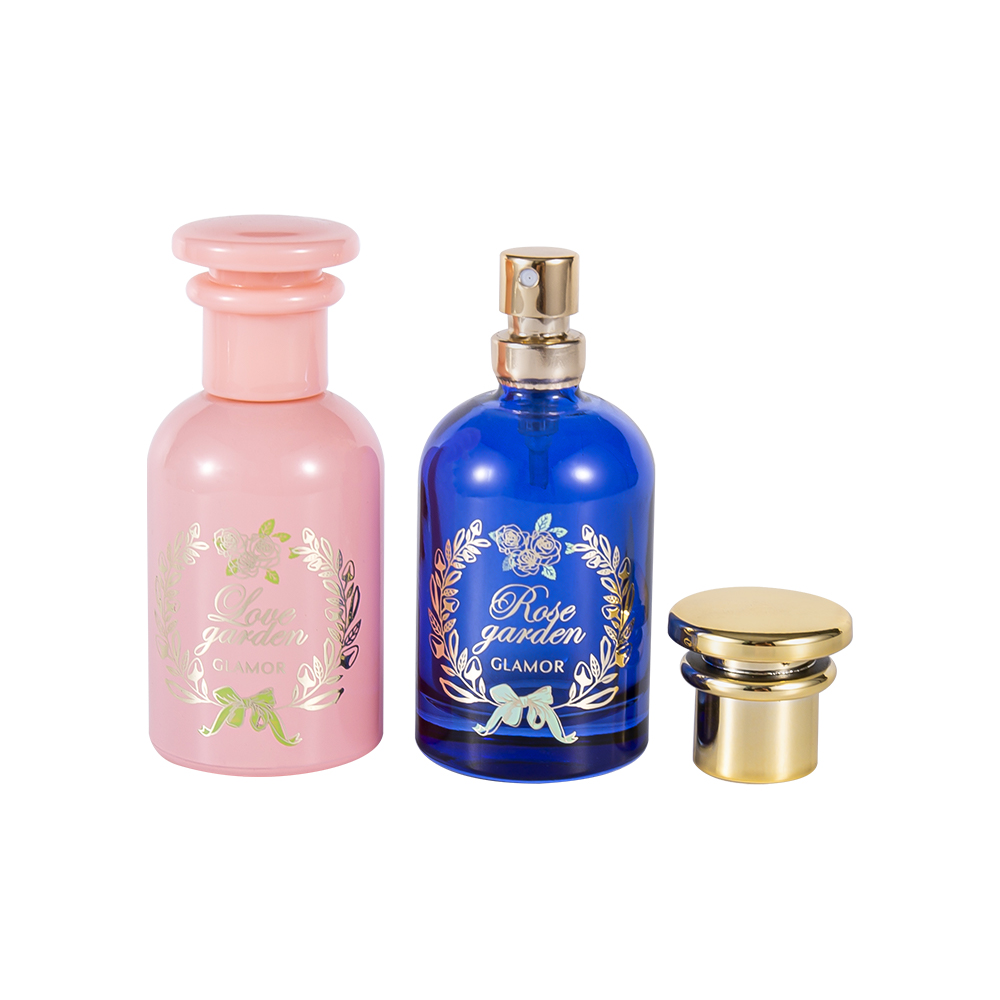
Hot-stamped and coated sets are where this shows up commercially. The same 100ml glass body can move from mid-market to premium tier on decoration and closure choice alone, with no change to the mold and no new tooling risk.
Late-stage packaging failures are usually blamed on glass, but they are almost always interface failures: neck finish, cap liner, pump torque, or the resin the cap was molded from. Fix the interface before the mold drawing is approved, not after.
Cap resin choice drives both hand feel and risk:
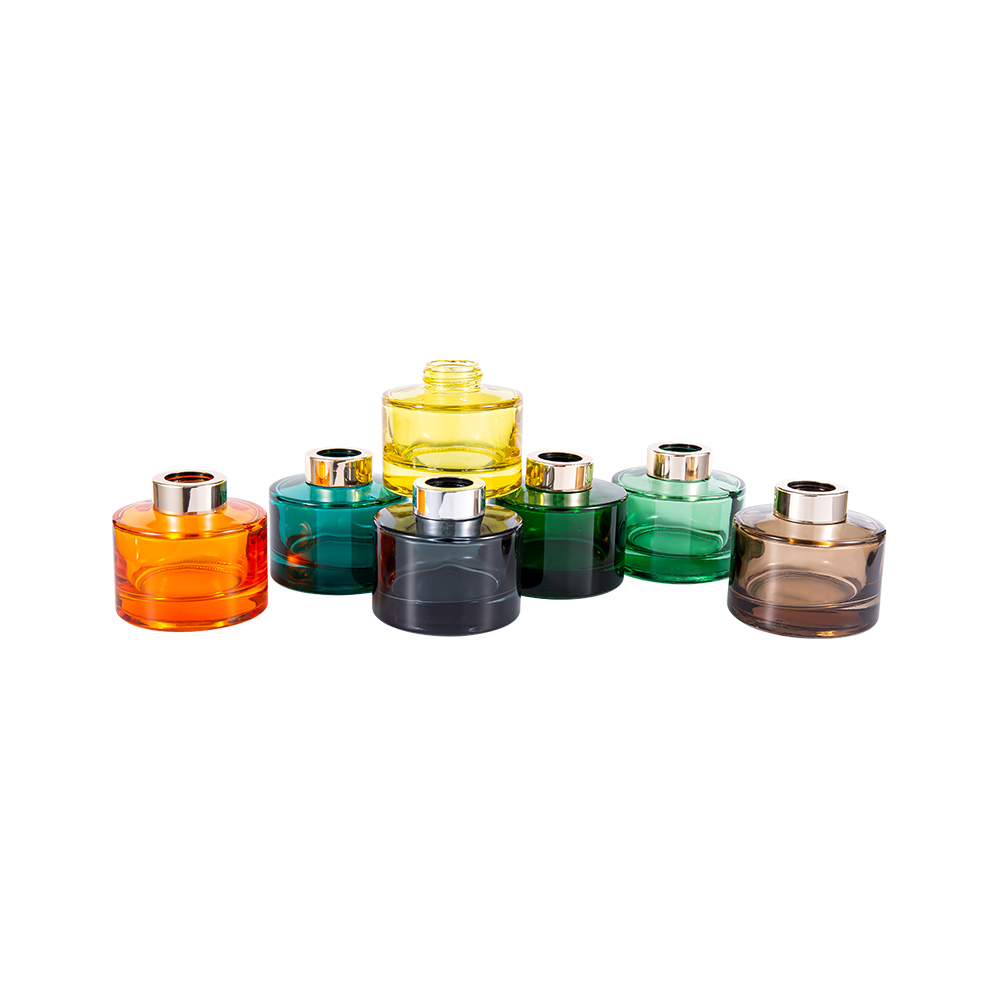
Neck specification ties all of it together. Reed diffusers in the HJ Glass Factory range commonly use a 24mm screw neck with a matte black plastic cap, while larger home diffusers step up to a 28mm UV aluminium cap for heavier shelf presence.
The most efficient custom project is one visual signature scaled across capacities, not three unrelated designs. A 100ml flacon, a 50ml travel size and a 30ml discovery format that share wall thickness, shoulder radius and neck finish let filling lines, decoration recipes and caps stay unchanged across the family.
That discipline pays twice. Tooling is charged per mold, so a derived 50ml body built from the same parent design normally costs less than a fresh shape. Decoration approvals also shrink, because coating, stamping and print processes carry over with only artwork dimensions to re-check.
Gradient coating with UV gold detailing is a useful test case: the technique reads as a limited edition at 100ml, and the same specification holds at 50ml without redeveloping the finish. Home scent extensions follow the same logic, since a diffuser bottle that echoes the flacon shoulder and cap colour turns two product lines into one brand statement.
Most delays in custom bottle projects come from approving things in the wrong order. Glass, then closure, then decoration, then artwork is the sequence that keeps a launch on schedule.
Expect a one-time tooling charge in the range of 1,500 to 6,000 USD for a typical 50ml or 100ml glass flacon, depending on shape complexity and cavity count. Development samples are usually quoted separately, and closing a mold after the first run costs far more than keeping it.
Two minimums apply and they are different numbers. The glass minimum covers the forming run, while the decoration minimum covers coating, stamping or printing setup. First orders are commonly sized to satisfy the decoration minimum first, since it is normally the higher of the two.
Yes, and it is a common way to extend a design investment. Perfume flacons use a crimp or spray neck, while reed diffusers use a 24mm screw neck, so the two share a visual signature rather than a mold. A 28mm screw neck version suits larger home diffusers.
Plan on eight to fourteen weeks from approved drawings to production-ready glass, with decoration trials adding two to three weeks when a new coating recipe is involved. Projects that approve the closure interface first sit at the fast end of that range.

+86 151 9036 6355
+86 510 8627 8328

hjglassfactory@vip.163.com

Room 1304, Jiufang Plaza, No. 286, Hongqiao South Road, Jiangyin City, Jiangsu Province, China
Copyright © 2025 HJ Glass Factory
All Rights Reserved.
Wholesale Empty Perfume Bottles, Empty Aromatherapy Bottles